


Why Does My Car Make a Noise When I Start It? 10 Startup Sounds Explained
The short answer: Some startup noises are completely normal, like a brief fuel pump hum, a louder idle for the first minute, or light ticking from direct-injection fuel injectors. Others point to a problem. Clicking usually means a weak battery or bad starter, grinding points to the starter gear, squealing is often a worn drive belt, and ticking that doesn't go away can mean low oil. The guide below helps you tell the difference.
Introduction
You turn the key or press the start button, and instead of the usual smooth start, you hear something new. Maybe it's a rapid click-click-click. Maybe it's a high-pitched squeal or a metallic grind. Your first thought is probably, "Is this serious, and is it going to be expensive?"
The good news is that your car's startup noises carry a lot of information. When you start a car, the battery, starter, charging system, drive belt, fuel system and engine all spring into action within a couple of seconds. A new or unusual sound during that moment usually points directly to which part needs attention. Catching it early is often the difference between a simple fix and a breakdown in a parking lot on a cold January morning.
This guide walks through the startup sounds our service technicians hear about most, explains what each one usually means, and tells you how urgent it is. We'll also cover which noises are perfectly normal, why cold Kansas City mornings make startup noises worse, and what you can safely check yourself before you book a service appointment.
Startup Noise Quick Reference
Use this table to quickly match the sound you're hearing to its most likely cause.
| What you hear | Most likely cause | How urgent? |
|---|---|---|
| Rapid clicking, engine won't crank | Weak or dead battery, loose or corroded cables | High: car may not start next time |
| One loud click, then nothing | Failing starter or starter solenoid | High |
| Grinding while cranking | Starter gear not meshing properly with the flywheel | High: can damage the flywheel |
| Whirring or whining with no cranking | Starter spinning without engaging the engine | High |
| Squealing or chirping for a few seconds | Worn or slipping drive belt, tensioner or pulley | Medium: check soon |
| Slow, labored cranking ("rrr-rrr-rrr") | Weak battery, often worse in the cold | Medium to high |
| Ticking that fades in seconds | Oil reaching the valvetrain, or normal injector noise | Low (monitor it) |
| Ticking or tapping that doesn't fade | Low oil level or pressure, lifter or valve issue | High: check oil now |
| Deep knocking | Possible internal engine wear | Very high: stop driving |
| Rattling under the car | Loose heat shield or exhaust part | Low to medium |
| Hissing under the hood | Vacuum leak, or coolant or oil on a hot part | Medium to high |
Normal Startup Sounds You Don't Need to Worry About
Before we get to the problem noises, it helps to know which sounds are simply part of how a modern car works.
- A brief hum or buzz from the back of the car. When you switch the ignition on, the electric fuel pump runs for a moment to pressurize the fuel system. A short hum from around the fuel tank is normal.
- A louder, higher idle for the first minute. After a cold start, most engines deliberately idle faster to warm up the engine and the catalytic converter quickly. The engine will sound louder, then settle down within a minute or two.
- Light, even ticking from the engine. Many modern engines use gasoline direct injection (GDI). The high-pressure injectors and fuel pump make a soft, rhythmic ticking that's often most noticeable at idle and on cold starts. This is a normal operating sound.
- A click or buzz shortly after you drive off. Many vehicles run a quick self-test of the antilock braking system at low speed after startup, which can make a brief buzzing or clicking sound and sometimes a slight pulse in the brake pedal.
- Hybrid and EV sounds. In a Hyundai hybrid, the gas engine may stay off at startup and start or stop on its own while you drive. Electric vehicles are nearly silent, but they play an exterior sound at low speeds to alert pedestrians. You may also hear cooling fans or pumps working after you park or while charging.
The rule of thumb: a normal sound is brief, consistent and the same every day. A sound that is new, getting louder, lasting longer or comes with a warning light deserves a closer look.
10 Startup Noises That Need Attention
1. Rapid Clicking When You Try to Start
A fast "click-click-click" with little or no engine cranking is the most common startup complaint, especially in winter. It usually means the battery has enough power to activate the starter solenoid, but not enough to actually spin the engine. The solenoid engages, the voltage drops, it disengages, and the cycle repeats rapidly.
Common causes:
- A weak or dead battery (the most likely cause)
- Loose or corroded battery terminals that block current
- An alternator that isn't recharging the battery while you drive
What to do: Look at the battery terminals for white or blue-green crusty buildup and make sure the cables are tight. Turn on the headlights: if they're dim or fade when you try to start, the battery is the likely culprit. A jump-start will usually get you going. If the car dies again shortly after the jumper cables are removed, the alternator may not be charging. Either way, have the battery and charging system tested. Browse replacement options on our Hyundai batteries page.
2. A Single Loud Click, Then Nothing
If you hear one solid click when you try to start, but the engine doesn't crank and your dashboard lights stay bright, the battery may be fine. The problem is more likely the starter motor or starter solenoid. The solenoid is trying to engage, but the starter motor isn't turning.
What to do: Try a jump-start. If the car still won't crank with a known-good jump, the starter or its wiring is the likely cause. Starters usually last a long time, but they do wear out eventually. This repair needs a technician.
3. Grinding While the Engine Cranks
A harsh, metallic grinding sound while you're starting the car usually comes from the starter. When you start the engine, a small gear on the starter slides out to mesh with a large toothed ring on the engine's flywheel (or flexplate) and spin it. If that gear is worn, or isn't sliding in and out properly, the teeth grind against each other instead of meshing cleanly.
Common causes:
- A worn starter drive gear
- Loose starter mounting bolts
- Damaged teeth on the flywheel or flexplate
- Holding the key in the "start" position after the engine is already running
What to do: Have it checked soon. Repeatedly starting the car while it grinds can chew up the flywheel teeth, which turns a starter repair into a much bigger job.
4. Whirring or Whining but the Engine Doesn't Turn Over
If you hear a high-pitched whir or spin, like a small electric motor running freely, but the engine itself doesn't crank, the starter motor is spinning without engaging the flywheel. This is often called a "freewheeling" starter. If the whir continues briefly after the engine starts, the starter gear may not be retracting properly.
What to do: This is a starter problem and won't fix itself. Schedule a repair before it leaves you stranded.
5. Squealing or Chirping for a Few Seconds
A loud squeal or series of chirps right after the engine starts, especially on a cold or damp morning, is usually the serpentine belt (also called the drive belt or accessory belt). This rubber belt is driven by the engine and powers the alternator, the air conditioning compressor and, on some engines, the water pump.
Common causes:
- A worn, cracked or glazed (shiny) belt that slips on the pulleys
- A weak belt tensioner that doesn't hold the belt tight
- A worn pulley bearing
- Moisture or cold temperatures that temporarily reduce grip
What to do: A brief squeal on a humid or freezing morning that disappears in a few seconds is a warning sign, not an emergency. Don't ignore it, though. If the belt breaks, your battery stops charging, and on some engines the water pump stops too, which can cause overheating. Have the belt and tensioner inspected at your next service.
6. Slow, Labored Cranking
If the engine turns over slowly, with a drawn-out "rrr... rrr... rrr" before it finally catches, your battery is likely struggling. This is especially common on the first cold mornings of the year.
Cold weather hits batteries hard. According to AAA, a car battery is about 35 percent weaker at 32°F and loses about 60 percent of its strength at 0°F, while a cold engine needs about twice as much power to start because the oil is thicker. A battery that seemed fine all fall can suddenly struggle.
What to do: Have the battery load-tested. AAA recommends testing once a battery is three years old and every year after. Slow cranking is often the last warning before a battery fails completely. For more cold-weather prep, see our Kansas City winter car prep checklist.
7. Ticking or Tapping From the Engine
Engine ticking can be completely normal or a sign of a real problem, so it's worth paying attention to how it behaves.
Usually normal:
- A light, steady tick from direct fuel injectors and the high-pressure fuel pump
- A tick that lasts only a few seconds after a cold start, then fades as oil pressure builds and reaches the top of the engine
Needs attention:
- Ticking or tapping that continues after the engine warms up
- Ticking that has gotten louder over the past few weeks
- Ticking along with an oil pressure warning light or check engine light
Persistent ticking can point to low oil level, low oil pressure, old or incorrect oil, or a valvetrain issue such as a worn lifter. A ticking sound that's loudest when cold and fades as the engine warms up can also come from a small exhaust manifold leak, since the metal expands and seals the gap once it heats up.
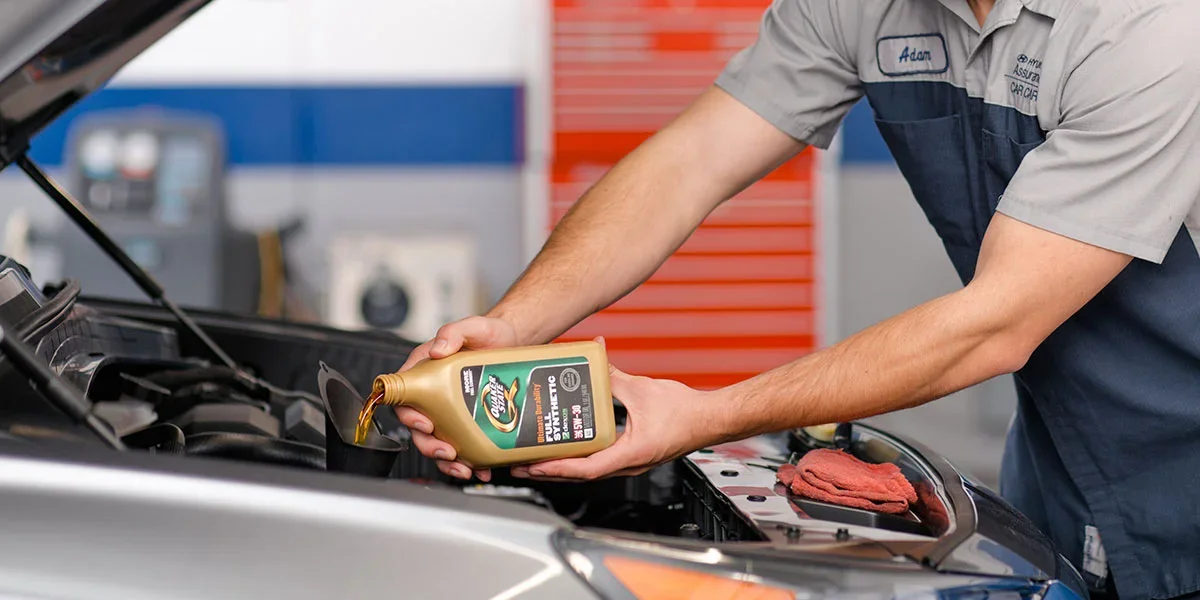
What to do: Park on level ground, let the engine cool, and check the oil level on the dipstick. If it's low, top it off with the oil grade listed in your owner's manual and schedule a service visit to find out why. If you're overdue for an oil change, book one on our Hyundai oil change page.
8. Deep Knocking
A deep, heavy knock from inside the engine, sometimes described as a "rod knock," is one of the most serious noises a car can make. It often gets louder as you rev the engine and can indicate worn internal bearings or another internal engine problem.
Stop driving and call for service. Continuing to drive with a deep engine knock can cause catastrophic engine damage. Check your oil level, and if the oil light is on or the level is very low, don't restart the engine. Have the car towed.
9. Rattling From Underneath
A tinny rattle or buzz from under the car at startup, especially at idle, is very often a loose heat shield. These thin metal panels protect the underbody from the hot exhaust, and their mounting points can rust or loosen over time, especially with road salt. A rattle can also come from a loose exhaust clamp or hanger, or occasionally from a failing catalytic converter.
What to do: A loose heat shield isn't dangerous on its own, but it's annoying, and a technician can usually secure it quickly. A rattle that comes with a rotten-egg smell, reduced power or a check engine light should be checked sooner.
10. Hissing Under the Hood
A hiss when you start the car, or right after you shut it off, can mean a few things:
- A vacuum leak: a cracked or disconnected vacuum hose can hiss and may cause a rough idle or check engine light.
- A coolant leak: coolant dripping onto a hot engine part can hiss and produce a sweet smell. Look for low coolant or puddles under the car.
- An oil leak: oil hitting the hot exhaust can hiss and smoke, with a burning smell.
What to do: Check your coolant and oil levels with the engine cool, look for drips under the car, and watch the temperature gauge. If the engine starts to overheat, pull over safely and turn it off. Never open a hot radiator or coolant cap.
Why Startup Noises Are Worse in Cold Weather
If you notice your car sounds different on frosty mornings, there's a good reason. Cold affects nearly every system involved in starting the engine:
- The battery produces less power, so the starter turns more slowly or clicks.
- Engine oil thickens and takes a few extra seconds to reach the top of the engine, which can cause a brief tick.
- Rubber belts stiffen and lose grip, which can cause a short squeal.
- Metal parts contract, so small gaps such as an exhaust leak can tick until they warm up and expand.
Kansas City's big temperature swings, with mild afternoons followed by freezing nights, make these issues pop up suddenly. If a noise appears only on cold mornings and disappears once warm, it's still worth mentioning at your next service. It's often the first sign of a part that's starting to wear.
Hyundai Startup Tips
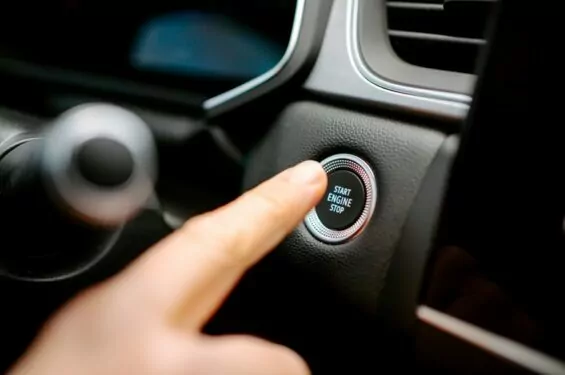
- Push-button start won't work? Make sure your foot is firmly on the brake and the shifter is in Park. If the dash says the key isn't detected, the smart key battery may be low. On most Hyundai models, you can hold the smart key fob directly against the Engine Start/Stop button to start the car. Check your owner's manual for your model's exact steps.
- Hybrid doesn't make engine noise at startup? That's normal. When you press the start button on a Hyundai hybrid, the "Ready" light comes on, and the gas engine may stay off until it's needed. Learn more in our guide: Do Hyundai hybrids need to be plugged in?
- Use remote start in winter. If your Hyundai has remote start through the key fob or the Hyundai Blue Link app, starting the car a few minutes early lets the cabin and windows warm up. Never use remote start in a closed garage.
- Check your warranty. Depending on your vehicle's age and mileage, some starting and engine components may be covered under your Hyundai warranty. See our Hyundai warranty page for details.
What You Can Check at Home Before Calling a Mechanic
You don't need tools or experience to gather useful information. These simple steps can help you and your technician pin down the problem faster:
- Record the sound. Take a short video on your phone while someone else starts the car. Sounds are hard to describe, and they don't always happen on cue at the service center.
- Note when it happens. Is it only on cold mornings? Every start? Only after the car sits for a few days? Does it go away when the engine warms up?
- Check your dashboard. Note any warning lights, such as the battery, oil pressure, temperature or check engine light.
- Check the oil level. With the engine off and cool, pull the dipstick, wipe it, reinsert it fully and check that the oil sits between the marks.
- Look at the battery. Check the terminals for corrosion and make sure the cables are tight. Look for a date sticker to see how old it is.
- Watch the headlights. Turn them on before starting. If they dim sharply while cranking, the battery is likely weak.
Get help right away if you notice:
- A deep knocking sound from the engine
- The oil pressure light or temperature warning light on
- Smoke from under the hood, or a strong burning smell
- A flashing check engine light, which can signal a serious misfire
Hear Something New? Let Our Technicians Take a Listen
Our Hyundai-certified technicians at McCarthy Olathe Hyundai can test your battery and charging system, inspect your starter and drive belt, and track down the source of any new noise using genuine Hyundai parts. Bring your phone video along; it helps.
Schedule Service View Service SpecialsFrequently Asked Questions
Why does my car click but not start?
Rapid clicking usually means the battery has enough power to activate the starter solenoid but not enough to turn the engine, which points to a weak or dead battery or loose, corroded battery cables. A single loud click with no cranking more often points to a failing starter or solenoid. A jump-start helps tell them apart: if the car starts with a jump, the battery or charging system is the likely cause.
Is it normal for my engine to be loud when I first start it?
Yes. Most modern engines idle at higher RPM for the first minute or so after a cold start to warm up the engine and catalytic converter quickly, which makes them sound louder. The idle should settle down within a minute or two. If the engine stays loud, roars when warm, or the check engine light comes on, have it inspected.
Why does my car squeal when I start it in the morning?
A squeal that lasts a few seconds after a cold start is usually the serpentine (drive) belt slipping because it is worn, glazed, loose, or damp from cold or humid weather. It can also come from a worn belt tensioner or pulley. Have it checked soon, because the drive belt powers the alternator and other accessories.
Is engine ticking on a cold start bad?
Not always. Many modern direct-injection engines make a light ticking sound from their fuel injectors and high-pressure fuel pump, which is normal. A tick that fades within a few seconds as oil pressure builds is also common. Ticking that gets louder, lasts after warm-up, or comes with low oil or a warning light should be checked right away. Start by checking your oil level.
Can cold weather cause my car to make noise when starting?
Yes. Cold weather thickens engine oil, stiffens rubber belts and weakens the battery. According to AAA, a battery is about 35 percent weaker at 32 degrees and about 60 percent weaker at zero degrees, while the engine needs about twice as much power to start. That can cause slow cranking, clicking, belt squeal and brief ticking on cold mornings.
Should I keep driving if my car makes a grinding noise when starting?
Get it checked soon. Grinding during or right after starting often means the starter gear isn't engaging or disengaging properly from the engine's flywheel. Continuing to start the car this way can damage the flywheel teeth, which turns a starter repair into a much more expensive job.
Why won't my Hyundai push-button start work?
Make sure your foot is firmly on the brake and the vehicle is in Park. If the dashboard says the key is not detected, the smart key battery may be low. Hold the smart key fob directly against the Engine Start/Stop button and press the button; check your owner's manual for the exact procedure on your model.
Conclusion
Your car's startup sounds are an early warning system. A brief hum, a faster idle and light injector ticking are normal parts of how modern engines work. But rapid clicking, grinding, whirring, squealing, persistent ticking or deep knocking are your car's way of telling you something needs attention, usually the battery, starter, drive belt or oil.
Most of these problems are much easier and less expensive to fix when they're caught early, before the battery dies completely or the starter damages the flywheel. If you're hearing something new, record it, check the basics, and let a professional take a listen.
Hearing a noise while you drive, too? Read our guide to 6 weird car sounds and what they could mean, or schedule service at McCarthy Olathe Hyundai and we'll find the cause.