
Blog

All Olathe Hyundai Dealer McCarthy Olathe Hyundai Service Olathe Hyundai Service Olathe Used Cars
Hyundai technician inspecting a wheel bearing and brakes on a lifted SUV at McCarthy Olathe Hyundai

Car Making Noise While Driving? Humming, Whining, Grinding and Clunking Explained

Car Making Noise While Driving? Humming, Whining and Grinding Explained Car Making Noise While Driving? Humming, Whining, Grinding and Clunking Explained The short answer: Humming that grows louder with speed usually comes from tires or a wheel bearing. Whining often points to the transmission, differential or an accessory. Grinding when braking typically means worn brake pads. Clicking when turning suggests a worn CV joint, and clunking over bumps points to suspension parts. The key to narrowing it down is noticing when the noise happens. Introduction You're cruising down I-35 or K-10, the radio's down, and you notice it: a hum that wasn't there last week. Or maybe it's a grind when you brake at a stoplight on 135th Street, or a clunk every time you go over the railroad tracks. Once you hear a new noise, it's hard to ignore it, and it's natural to wonder whether it's serious. Most noises that show up while you're driving come from the parts that work hardest when the car is moving: tires, wheel bearings, brakes, suspension, steering and the drivetrain. Each one tends to make a distinctive sound under specific conditions. That's good news, because if you pay attention to what the noise sounds like and when it happens, you can usually narrow down the cause before you ever open the hood. This guide covers the noises our service technicians hear about most, what they usually mean, and how urgent each one is. If your noise happens mainly when you first start the car, see our companion guide: Why does my car make a noise when I start it? First, Ask These 5 Questions Before you try to identify the noise, take note of the conditions. These clues help you, and your technician, find the cause much faster: Does it change with vehicle speed or engine speed? A noise that rises with how fast the car is moving, even if you shift into neutral, usually comes from tires, bearings, brakes or the driveline. A noise that rises with engine RPM, even when parked, usually comes from the engine or its accessories. Does it happen when braking? Brake-related noises usually start or change when you press the pedal. Does it happen when turning? Turning loads the suspension, steering and wheel bearings differently. Note whether it's worse turning left or right. Does it happen over bumps? Clunks and rattles over bumps usually point to suspension, steering or loose parts. Where does it seem to come from? Front or rear? Left or right? Under the car or inside the cabin? Driving Noise Quick Reference What you hear, and when Most likely cause How urgent? Humming or droning that rises with speed Tire wear or a worn wheel bearing Medium: check soon Hum that changes when turning one direction Wheel bearing (often on the opposite side) Medium to high Whining that rises with speed Differential or transmission Medium to high Whining that rises with engine RPM Alternator, pulley or other accessory Medium High-pitched squeal when braking Brake pad wear indicator Medium: book brake service Harsh grinding when braking Brake pads worn to metal High: service now Clicking or popping in tight turns Worn CV joint Medium to high Clunking over bumps Sway bar links, ball joints, bushings, struts Medium to high Rattling under the car Loose heat shield or exhaust part Low to medium Roaring or rumbling when accelerating Exhaust leak Medium Rhythmic thumping or flapping Tire damage or object in the tire High: pull over safely Whistling at highway speed Door or window seal, roof rack Low Humming or Droning Noise While Driving A low hum, drone or "growl" that gets louder as you go faster is one of the most common complaints we hear. It almost always comes from one of two places. Tires Tires naturally make some road noise, but certain conditions make them much louder: Uneven wear, such as "cupping" (scalloped dips around the tread) or "feathering" (tread blocks worn at an angle). These are often caused by worn suspension parts, poor alignment or skipped tire rotations. Aggressive tread, like all-terrain or winter tires, which are noisier by design. Underinflation, which changes how the tread contacts the road. Tire noise often changes as you drive over different road surfaces, such as smooth new asphalt versus rough concrete. Run your hand carefully over the tread when the car is parked. If it feels wavy or saw-toothed, uneven wear is likely. Keeping up with tire rotations and alignment checks helps prevent it. Find the right replacement set at our Hyundai tire center. Wheel Bearings Each wheel spins on a sealed bearing. When a bearing starts to wear out, it typically produces a steady hum or growl that rises with vehicle speed and doesn't change much with the road surface. Here's a useful test: on a safe, empty road, gently weave left and right. Turning shifts the car's weight onto the bearings on the outside of the turn. If the noise gets louder when you turn left, the right-side bearing is a likely suspect, and vice versa. Other signs of a failing wheel bearing include a vibration you can feel in the steering wheel or floor, and in some cases an ABS warning light, because many bearings house the wheel speed sensor. A worn bearing will get louder over time and can eventually affect steering and safety, so have it checked soon. Whining Noise While Driving A whine is a higher-pitched, steady tone. The trick to identifying it is noticing whether it follows vehicle speed or engine speed. Whine that rises with vehicle speed: This can come from the differential, which splits power between the wheels, or from the transmission. On all-wheel-drive vehicles, including Hyundai models with HTRAC AWD such as the Tucson and Santa Fe, the rear differential and transfer components are also possibilities. Low or old fluid is a common contributor. Whine that rises with engine RPM: If the whine changes when you rev the engine in park, the source is likely under the hood, such as the alternator, a belt-driven pulley or tensioner, or on some vehicles a hydraulic power steering pump. Most newer Hyundai models use electric power steering, so a steering whine on those vehicles is less likely to be fluid-related. Whine when turning the steering wheel: On vehicles with hydraulic power steering, low fluid can cause a whine when turning. On any vehicle, a new steering noise is worth having checked. Transmission and differential problems are much easier and less expensive to address early, so don't let a new whine go unchecked for long. Grinding Noise While Driving or Braking Grinding When You Brake Grinding while braking is one of the most important noises to take seriously. Here's how to tell the difference between harmless and serious: Usually harmless: A light scraping or grinding for the first few stops after rain, snow or a car wash. Brake rotors are bare iron and develop a thin layer of surface rust quickly. It wears off within a few stops. Serious: A harsh, metal-on-metal grind that continues every time you brake. This usually means the brake pads have worn through their friction material, and the metal backing plates are scraping the rotors. Stopping distances increase, and the rotors can be damaged quickly. Grinding can also come from a small stone or piece of debris caught between the rotor and the brake dust shield. That often sounds like a constant scraping that comes and goes. It's usually an easy fix, but have it checked to rule out worn pads. Don't wait on brake grinding. If you hear continuous metal-on-metal grinding when you brake, schedule brake service right away. Learn more on our Hyundai brake service page. Grinding When Not Braking A grinding or growling noise while driving, without touching the brakes, can come from a badly worn wheel bearing, a worn CV joint, or a brake component that's dragging. Any grinding sound that's new should be inspected promptly. Squealing or Squeaking While Driving Squeal when braking: Many brake pads have a small metal tab called a wear indicator. When the pad wears down to a certain thickness, the tab contacts the rotor and makes a high-pitched squeal. It's designed to get your attention before the pads wear out completely, so it's time to book a brake inspection. Squeak over bumps or when turning: This often comes from dry or worn suspension bushings, ball joints or strut mounts. Rubber bushings dry out and harden over time, especially after years of temperature swings. Squeal when accelerating: This typically points to a slipping drive belt. If you hear it mainly at startup, our startup noise guide covers it in detail. Clicking or Popping When Turning A rhythmic clicking or popping sound when you turn, especially during slow, tight turns like pulling into a parking spot, is a classic sign of a worn outer CV (constant velocity) joint. CV joints are part of the axles that deliver power to the wheels while allowing them to steer and move up and down. Each CV joint is packed with grease and sealed by a flexible rubber boot. If the boot tears, the grease escapes and dirt and water get in, which wears the joint quickly. A torn boot can sometimes be spotted as grease splattered on the inside of the wheel. Caught early, a torn boot can be addressed before the joint fails. If the clicking is already present, the axle or joint typically needs replacement. Don't put it off, because a CV joint that fails completely can leave you unable to drive. Clunking or Knocking Over Bumps A clunk, knock or thud when you go over bumps, potholes or railroad tracks almost always points to the suspension or steering system. Common culprits include: Sway bar (stabilizer) links: a very common source of clunks over uneven pavement. Ball joints: these connect the wheels to the suspension and allow steering movement. Control arm bushings: rubber cushions that absorb movement and wear out over time. Shocks and struts: worn units can clunk and also make the car feel bouncy or floaty. Strut mounts: can clunk or creak when turning or over bumps. Suspension and steering parts directly affect handling and braking, so a new clunk deserves a prompt inspection, especially after a hard pothole hit. Kansas City's freeze-thaw cycles create plenty of potholes every late winter and spring. Rattling, Roaring and Thumping Rattling From Underneath A tinny rattle from under the car, often at idle or certain speeds, is frequently a loose heat shield. These thin metal panels protect the underbody from the hot exhaust, and road salt can rust their mounting points. A loose exhaust clamp or hanger can also rattle. Before you book service, check for loose items inside the car, too: a water bottle under the seat or items in the door pockets can sound surprisingly mechanical. Roaring or Rumbling When Accelerating If your car suddenly sounds louder or "sportier" when you accelerate, an exhaust leak is a likely cause. Besides the noise, exhaust leaks can let fumes reach the cabin. If you smell exhaust inside the car, roll the windows down and have it inspected promptly. Thumping or Flapping A rhythmic thump-thump-thump that speeds up as you go faster can mean a damaged tire, such as a bulge in the sidewall or separated tread, a flat spot, or something stuck in the tread. A flapping sound can mean tread separation or a loose underbody panel. Pull over somewhere safe and inspect your tires. A damaged tire can fail suddenly. Whistling and Wind Noise A whistle or rushing sound that appears at highway speeds and changes with wind direction usually comes from worn or misaligned door and window seals, or from roof racks and crossbars. It isn't a safety issue, but it can be annoying on long drives. A technician can check the seals and alignment of the doors and windows. Normal Sounds in Hyundai Hybrids and EVs If you've recently switched to a Hyundai hybrid or electric vehicle, some sounds may be new to you, but completely normal: Electric motor whir: Electric motors make a light, smooth whir that rises with speed, and you may notice it more during regenerative braking. Pedestrian alert sound: Federal safety standards require hybrid and electric vehicles to make an exterior alert sound at low speeds, up to about 18.6 mph, so pedestrians and cyclists can hear them coming. Engine starting and stopping: In a hybrid, the gas engine turns on and off on its own while you drive. That's the hybrid system working as designed. Learn more in our guide: Do Hyundai hybrids need to be plugged in? Pumps and fans: Cooling pumps and fans for the battery and electronics may run while driving, charging or after you park. Because EVs and hybrids are so quiet, tire, wind and suspension noises can be more noticeable than in a gas car. That doesn't mean something is wrong, but any new grinding, clunking or harsh whining should still be checked. What to Do When You Hear a New Noise Note the conditions. Write down the speed, whether you were braking, turning or accelerating, and whether the road was rough or smooth. Record it safely. Have a passenger record a short video with sound. Never record while you're driving. Check your tires. Look for low pressure, bulges, objects in the tread or uneven wear. Look for warning lights. Note any brake, ABS, check engine, temperature or tire pressure lights. Remove loose items. Clear out the trunk, door pockets and under the seats to rule out rattles. Schedule an inspection. Bring your notes and video. A road test with a technician is often the fastest way to find the source. Pull over safely and call for help if: You hear harsh metal-on-metal grinding every time you brake, or the brake pedal feels different You hear a loud thumping or flapping from a tire The noise comes with a strong vibration through the steering wheel or floor The car pulls hard to one side or steering suddenly feels loose You see smoke, smell burning, or a red warning light comes on Prevention tip: Many driving noises trace back to wear that's caught during routine maintenance. Regular tire rotations, alignment checks and brake inspections help spot problems early. Check our service specials for current savings, and get ready for cold weather with our Kansas City winter car prep checklist. Let Our Technicians Track Down That Noise Our Hyundai-certified technicians at McCarthy Olathe Hyundai can road-test your vehicle, inspect your brakes, tires, wheel bearings and suspension, and find the source of that noise using genuine Hyundai parts. Bring your notes and phone video, and we'll take it from there. Schedule Service Brake Service Frequently Asked Questions Why does my car make a humming noise that gets louder as I speed up? The two most common causes are tires and wheel bearings. Tire noise usually changes with the road surface and often comes from uneven wear. Wheel bearing noise is a steady hum or growl that rises with speed and often gets louder when you turn one direction, because turning puts more weight on the bearing on the opposite side. How can I tell if it's a wheel bearing or tire noise? Tire noise tends to change as you drive over different road surfaces. Wheel bearing noise stays fairly consistent on any surface and often changes when you gently weave or turn. If the noise gets louder in a left turn, the right-side bearing is a likely suspect, and vice versa. A technician can confirm by lifting the car and checking each wheel for roughness or play. Why do my brakes grind? A light grinding sound for the first few stops after rain or a car wash is usually surface rust on the rotors and goes away quickly. Grinding that continues, especially a harsh metal-on-metal sound, usually means the brake pads are worn down to their metal backing plates. Have your brakes inspected right away, because worn pads reduce stopping power and can damage the rotors. What does a clicking noise when turning mean? A rhythmic clicking or popping noise when you turn, especially during sharp, slow turns like in a parking lot, is a classic sign of a worn outer CV (constant velocity) joint. These joints are protected by rubber boots, and a torn boot lets grease escape and dirt in. Have it inspected soon, because a failed CV joint can leave you unable to drive. Why does my car clunk when I go over bumps? Clunking over bumps usually points to worn suspension or steering parts, such as sway bar links, ball joints, control arm bushings, or shocks and struts. Some of these parts affect steering and handling, so have the suspension inspected promptly, especially after hitting a pothole. Is it normal for my electric or hybrid Hyundai to make a whirring sound? Yes. Electric motors make a light whir or hum, and you may hear it more during regenerative braking. Federal rules also require hybrid and electric vehicles to make an exterior alert sound at low speeds, up to about 18.6 mph, so pedestrians can hear them coming. New grinding, clunking or loud whining is not normal and should be checked. When should I stop driving if my car is making noise? Pull over safely and call for help if you hear a loud metal-on-metal grinding from the brakes, a heavy knocking from the engine, a loud flapping or thumping from a tire, or if the noise comes with a warning light, smoke, a burning smell, a vibration through the steering wheel or a change in how the car steers or stops. Conclusion A new noise while driving is your car's way of telling you something has changed. Humming usually points to tires or wheel bearings, whining to the drivetrain or an accessory, grinding to the brakes, clicking in turns to a CV joint, and clunking over bumps to the suspension. Paying attention to when the noise happens, whether at certain speeds, when braking, when turning or over bumps, is the fastest way to narrow down the cause. Most of these problems are simpler and less expensive to fix when they're caught early, before a worn part damages the parts around it. If you're hearing something new, don't turn up the radio and hope it goes away. Schedule service at McCarthy Olathe Hyundai, and our technicians will find the source and get you back to quiet, confident driving. Want to learn about more sounds? Read our guide to 6 weird car sounds and what they could mean.

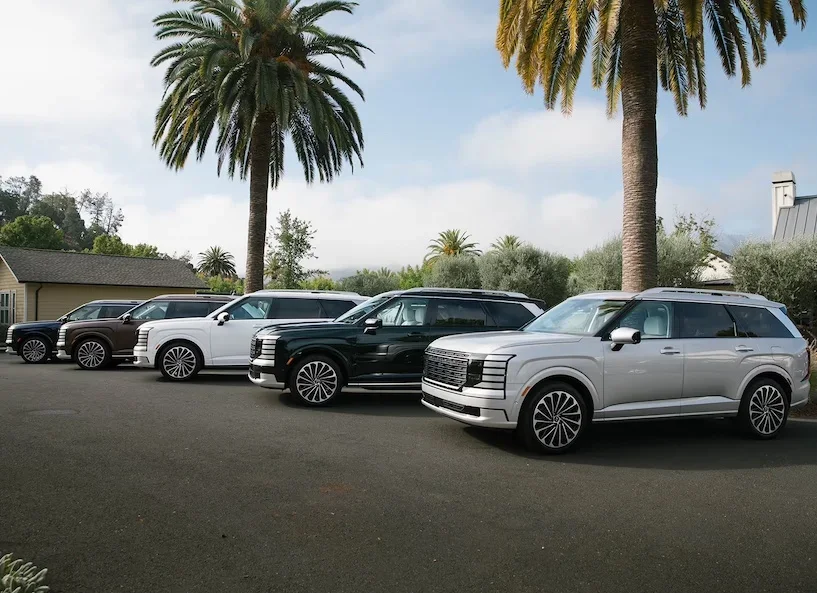
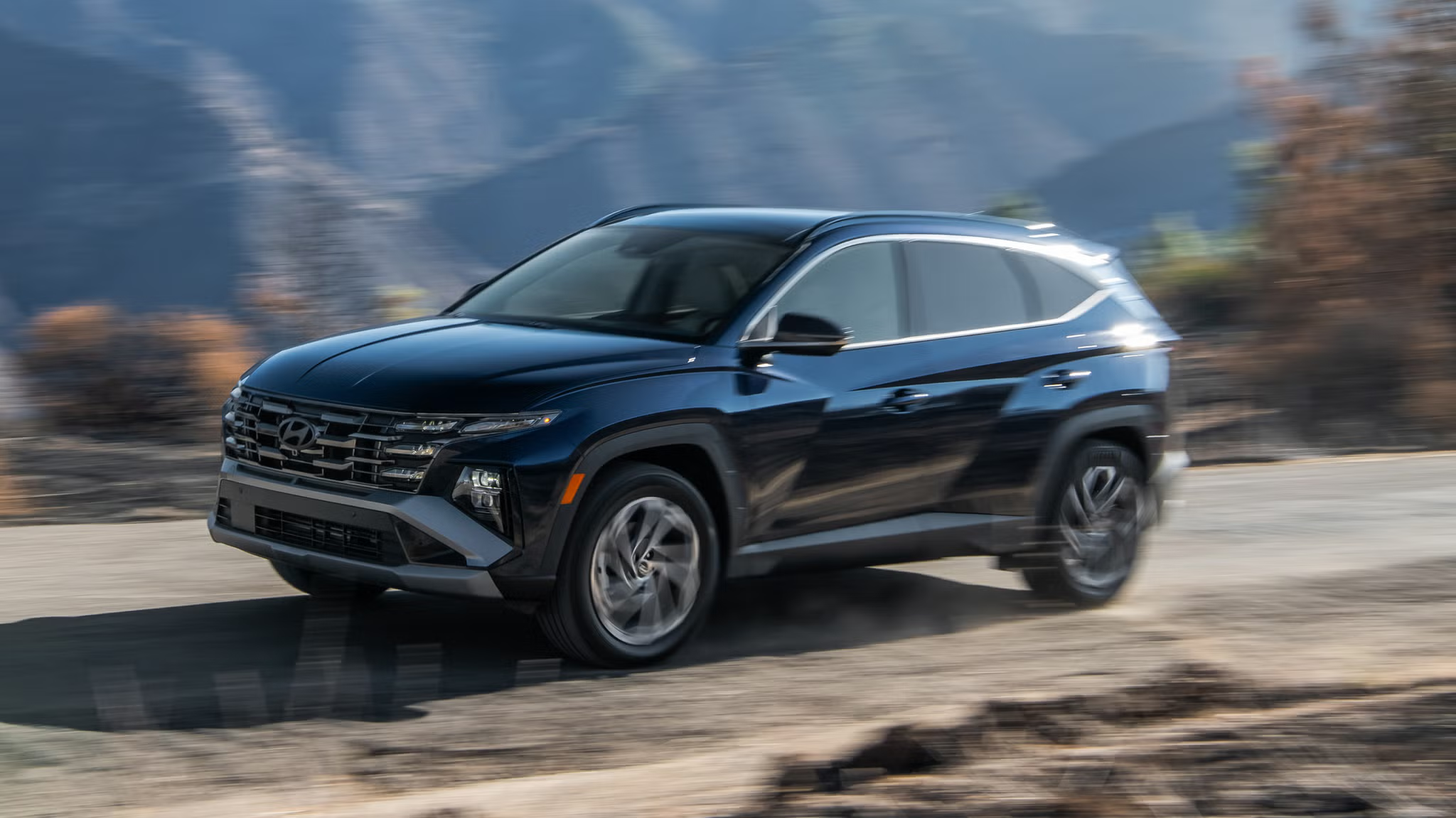
All-new 2027 Hyundai Tucson on display alongside the 2027 Palisade and IONIQ 9

2027 Hyundai Lineup: What's New and When It Arrives in Olathe

2027 Hyundai Lineup: What's New and When It Arrives in Olathe 2027 Hyundai Lineup: What's New and When It Arrives in Olathe The headline: The biggest 2027 Hyundai news is the all-new, next-generation Tucson, revealed on October 1, 2026, and arriving in North America in 2027. Hyundai is also adding the IONIQ 6 N performance EV and new Calligraphy Black Ink editions of the Palisade Hybrid and IONIQ 9. Most other models, including the Santa Fe, Kona, IONIQ 5, Sonata and Santa Cruz, carry over with minor updates. Introduction Every fall, shoppers start asking the same question: "What's new for next year, and is it worth waiting for?" For 2027, Hyundai has an unusual mix of answers. One of its most popular vehicles is getting a complete redesign, a couple of flagship models are getting dramatic new editions, a high-performance EV is joining the lineup, and several models are carrying over with only small changes. That mix makes this a great time to shop, as long as you know what's changing. If the model you want is a carryover, you may be able to save on a 2026 during model-year changeover. If it's getting a redesign, you might decide the wait is worth it. In this guide, we'll go model by model through the 2027 Hyundai lineup as of this writing: what's new, what carries over, what's going away, and when you can expect to see the new models at McCarthy Olathe Hyundai. Some 2027 details haven't been announced yet for the U.S. market; where that's the case, we'll say so. We'll keep this page updated as Hyundai releases more information. 2027 Hyundai Lineup at a Glance Model Status for 2027 Headline change Tucson / Tucson Hybrid All-new generation Complete redesign, new tech, new hybrid; North America in 2027 Palisade / Palisade Hybrid Carryover + new edition New Hybrid Calligraphy Black Ink IONIQ 9 Carryover + new edition New Performance Calligraphy Black Ink IONIQ 6 N New 601-hp performance EV, limited quantities IONIQ 6 (standard) Discontinued in U.S. IONIQ 6 N is the only IONIQ 6 for 2027 Santa Fe / Santa Fe Hybrid Carryover 2027 pricing announced IONIQ 5 Carryover Minor feature and color updates Kona Carryover Builds on 2026 trim updates Venue Expected carryover Few changes expected in the U.S. Sonata / Sonata Hybrid Carryover No major changes Elantra / Elantra Hybrid To be announced U.S. details still to come Santa Cruz Carryover On sale now All-New Next-Generation Hyundai Tucson The Tucson is the star of Hyundai's next wave. Hyundai unveiled the redesigned SUV at a world premiere in New York on October 1, 2026, calling it its "boldest SUV." It launches in Korea first, and Hyundai says North America will follow in 2027. Bigger, Bolder Design The new Tucson uses Hyundai's "Art of Steel" design language, with new H-Edge front lighting and Prism rear lamps. It's larger in every direction than today's model. The long-wheelbase version measures about 185 inches long (2.4 inches longer than before), about 75 inches wide and about 66.3 inches tall, on a 109.6-inch wheelbase. That should translate into more passenger and cargo room for a compact SUV that's already one of the roomiest in its class. New Hybrid and Off-Road-Ready Trims Hybrid: A new hybrid system rated at 233 horsepower for the U.S. Hyundai is targeting up to 42 mpg for the front-wheel-drive hybrid with 17-inch wheels. The hybrid is rated to tow up to 3,000 pounds in North America. Plug-in hybrid: A plug-in version with an estimated 50 miles of electric range is planned for select markets. U.S. availability hasn't been confirmed. XRT and XRT PRO: The rugged XRT returns, joined by a new XRT PRO with all-wheel drive, all-terrain tires, about 8.3 inches of ground clearance and Hyundai's first Smart Terrain Assist system, offered in North America. Next-Generation Technology Inside, the new Tucson debuts Hyundai's Pleos Connect infotainment system, built on Android Automotive, with a main touchscreen of up to 17 inches and a 9.9-inch digital driver display. Hyundai is also introducing Gleo AI, a conversational in-car voice assistant, though availability varies by market. New driver-assistance features include driver monitoring, speed limit assist and navigation-based smart cruise control. Final U.S. trims, pricing and fuel economy ratings will be announced closer to launch. Until then, the current Tucson remains available, including the gas, hybrid and plug-in hybrid models. Explore it on our Hyundai Tucson page. 2027 Hyundai Palisade The Palisade was completely redesigned for 2026, so the 2027 model carries over with the same bigger body, available eight-passenger seating and the choice of a 3.5-liter V6 or the 329-horsepower 2.5-liter turbo hybrid. The big addition is the new Palisade Hybrid Calligraphy Black Ink, which arrived at U.S. dealerships in July 2026. It takes the top Calligraphy trim and gives it a darker, more dramatic look: Gloss-black alloy wheels, roof rails and D-pillars Satin-black bumper and skid plates, and black Hyundai "H" and tailgate badging Non-reflective black interior trim in place of bright aluminum and silver accents Three paint colors: Abyss Black Pearl, Ecotronic Gray Pearl and Creamy White Pearl The Black Ink is offered only with the hybrid powertrain and starts at $59,280 for FWD and $61,280 for AWD, including a $1,600 destination charge. See trims and availability on our Hyundai Palisade page. 2027 Hyundai IONIQ 9 Hyundai's first three-row electric SUV also gets a Black Ink treatment for 2027. The IONIQ 9 Performance Calligraphy Black Ink comes exclusively in Abyss Black Pearl with black chrome exterior accents, gloss-black roof rails, 21-inch wheels and an all-black interior. It's based on the most powerful IONIQ 9, with dual-motor all-wheel drive making 422 horsepower and 516 lb-ft of torque. Hyundai estimates about 311 miles of range from the 110.3-kWh battery, and the 800-volt architecture allows a 10 to 80 percent DC fast charge in about 24 minutes. A built-in NACS port gives access to Tesla Superchargers. Premium features include a 10-inch head-up display, a 14-speaker Bose audio system, heated third-row seats and Remote Smart Parking Assist 2. The IONIQ 9 is assembled in Georgia. Learn more on our 2027 IONIQ 9 page. 2027 Hyundai IONIQ 6 N and the IONIQ 6 Performance fans have something new to get excited about. The IONIQ 6 N joins the lineup for 2027 in limited quantities. Its dual electric motors and 84.0-kWh battery produce 601 horsepower and 545 lb-ft of torque, rising briefly to 641 horsepower and 568 lb-ft with N Grin Boost. It adds an electronically controlled limited-slip differential, adaptive suspension, upgraded brakes, wider bodywork, 20-inch Pirelli P Zero tires and N e-Shift, which simulates an eight-speed transmission with paddle shifters. At the same time, the standard IONIQ 6 sedan is no longer offered in the U.S. for 2027. The IONIQ 6 N is the only IONIQ 6 model for the new model year, although some new non-N IONIQ 6 models may still be available in dealer inventory. If you've had your eye on an IONIQ 6, now is the time to ask about what's left. 2027 Hyundai Santa Fe The Santa Fe, redesigned for 2024, carries over for 2027 with its boxy, three-row design, a 2.5-liter turbo engine with an eight-speed automatic, and the 1.6-liter turbo hybrid. Hyundai's official 2027 pricing took effect July 20, 2026: 2027 Santa Fe trim FWD MSRP AWD MSRP SE $35,300 $37,100 SEL $37,840 $39,640 XRT (AWD only) — $42,290 Limited $44,850 $46,650 Calligraphy $47,850 $49,650 SE Hybrid $36,650 $38,450 SEL Hybrid $38,940 $40,740 Limited Hybrid $45,950 $47,750 Calligraphy Hybrid $48,950 $50,750 Hyundai MSRP effective July 20, 2026. Excludes $1,650 freight, taxes, title, license and dealer fees. Prices subject to change. The XRT remains the towing champ of the lineup at up to 4,500 pounds with trailer brakes, compared with 3,500 pounds for other gas models and 2,000 pounds for the hybrid. Explore every trim on our Hyundai Santa Fe page. 2027 Hyundai IONIQ 5 The IONIQ 5 electric crossover carries over for 2027 with minor updates, including revised color choices, available roof rails on the SEL trim and a cargo cover accessory. It keeps the same strong range figures: up to 318 miles for the rear-wheel-drive long-range model and 245 miles for the SE Standard Range, along with 350-kW-capable DC fast charging and a built-in NACS port. See current inventory on our IONIQ 5 page. 2027 Hyundai Kona The Kona received a significant trim and feature shuffle for 2026, adding new SEL Sport and SEL Premium trims and making Smart Cruise Control with Stop & Go standard. The 2027 Kona builds on those updates and is largely a carryover. Learn more on our Hyundai Kona page. 2027 Hyundai Venue Hyundai's smallest SUV is expected to return for 2027 in the U.S. with few changes, keeping its 1.6-liter engine, front-wheel drive and an 8-inch touchscreen with wireless Apple CarPlay and Android Auto. The Venue was updated for 2026 with a new SEL trim featuring a two-tone roof. Ask us about current Venue availability and pricing. 2027 Hyundai Elantra and Elantra Hybrid Hyundai hasn't announced U.S. details for the 2027 Elantra yet. In Korea, Hyundai has introduced a new-generation version of the car (called the Avante there), with a larger body, Pleos Connect infotainment, bigger available screens and an AI voice assistant. Hyundai hasn't confirmed which of those changes will reach U.S. models or when. In the meantime, the current Elantra and Elantra Hybrid, rated at up to 54 mpg combined, remain available. Visit our Hyundai Elantra page. 2027 Sonata, Sonata Hybrid and Santa Cruz The Sonata and Sonata Hybrid carry over for 2027 without major changes. The Sonata keeps the dual 12.3-inch displays and available all-wheel drive added in its recent refresh, and the Sonata Hybrid continues with the efficient Blue trim added for 2026. The Santa Cruz sport adventure vehicle also returns for 2027 and is already arriving at dealerships. It continues to offer front- or all-wheel drive and a versatile open bed. When Do 2027 Hyundai Models Arrive in Olathe? Hyundai doesn't launch every model on the same day. New model years roll out one vehicle at a time over several months. As of this writing: Already arriving: 2027 Santa Fe, Palisade (including the Hybrid Calligraphy Black Ink), IONIQ 9, Kona and Santa Cruz models have begun reaching dealers. Coming later: The all-new Tucson is scheduled to reach North America in 2027. Elantra details are still to be announced. Limited availability: The IONIQ 6 N is being built in limited quantities. Inventory changes week to week, so the best way to know what's on our lot is to check our live inventory or contact our sales team. We're happy to let you know when a specific 2027 model arrives. Should You Buy a 2026 Hyundai Now or Wait for 2027? This is one of the most common questions we get this time of year. Here's how to think about it: Buy a 2026 now if... The model is a carryover. For the Santa Fe, Kona, IONIQ 5, Sonata and Venue, the differences between 2026 and 2027 are small, so a 2026 gives you nearly the same vehicle. You want the best deal. During model-year changeover, dealers and manufacturers often offer incentives to clear remaining 2026 inventory. You need a vehicle soon. There's no reason to wait months if the 2027 version won't change much. You want a standard IONIQ 6. Remaining 2026 inventory may be your last chance to buy one new. Wait for a 2027 if... You want the all-new Tucson. Its new design, bigger cabin, new hybrid and next-generation tech are major changes. You want a specific new edition, like the Palisade Hybrid or IONIQ 9 Black Ink, or the IONIQ 6 N. You plan to keep the car a long time. A newer model year can help a little with resale value later on. Pro tip: Compare the out-the-door price of both model years side by side, including incentives and financing offers. Check current deals on our Hyundai finance offers page, and read our guide to leasing vs buying if you're weighing both options. Be First in Line for the 2027 Hyundai You Want Tell us which 2027 Hyundai you're interested in, and McCarthy Olathe Hyundai will let you know as soon as it arrives. Or stop by to compare 2026 and 2027 models side by side and see which is the better deal for you. Compare Hyundai SUVs See Current Offers Frequently Asked Questions What new Hyundai models are coming for 2027? The biggest news is the all-new, next-generation Hyundai Tucson, which Hyundai unveiled on October 1, 2026, with North American sales starting in 2027. Other highlights include the high-performance IONIQ 6 N, new Calligraphy Black Ink editions of the Palisade Hybrid and IONIQ 9, and updated 2027 versions of the Santa Fe, Kona, IONIQ 5 and Santa Cruz. When does the all-new 2027 Hyundai Tucson come out? Hyundai revealed the next-generation Tucson at a world premiere in New York on October 1, 2026. It launches in Korea first, and Hyundai says North America will follow in 2027. Contact McCarthy Olathe Hyundai to be notified when it arrives in Olathe. How much does the 2027 Hyundai Santa Fe cost? According to Hyundai's pricing effective July 20, 2026, the 2027 Santa Fe starts at $35,300 MSRP for the SE FWD, with the Santa Fe Hybrid starting at $36,650. The top Calligraphy Hybrid AWD is $50,750. A $1,650 freight charge, taxes and fees are additional. Is the Hyundai IONIQ 6 discontinued? For the 2027 model year in the U.S., the standard IONIQ 6 is no longer offered, and the high-performance IONIQ 6 N is the only IONIQ 6 model sold. Some new non-N IONIQ 6 models may still be available in dealer inventory. Should I buy a 2026 Hyundai now or wait for the 2027? For models that carry over with few changes, buying a 2026 during model-year changeover can be a smart way to save, since dealers often offer incentives to clear remaining inventory. If you want the redesigned next-generation Tucson or a specific new edition, it may be worth waiting. Compare prices, incentives and features on both model years before you decide. What is the Hyundai Black Ink edition? Black Ink is a blacked-out design package on top Calligraphy trims. For 2027 it is offered on the Palisade Hybrid Calligraphy and the IONIQ 9 Performance Calligraphy, and adds gloss-black or black-chrome exterior trim, black wheels and badging, and dark interior finishes in place of bright metal accents. Conclusion The 2027 Hyundai lineup is a mix of big news and steady refinement. The all-new Tucson is the headliner, bringing a bolder design, more space, a new hybrid and Hyundai's next-generation Pleos Connect technology to one of America's favorite compact SUVs. The IONIQ 6 N brings serious performance, and the new Black Ink editions give the Palisade Hybrid and IONIQ 9 a striking new look. Meanwhile, proven models like the Santa Fe, Kona, IONIQ 5 and Sonata carry over, which can make a 2026 model an especially smart buy right now. Whether you're ready to buy today or want to be first in line for a 2027, the team at McCarthy Olathe Hyundai is here to help. Stop by our Olathe showroom, or start by comparing models with our Hyundai SUV comparison guide. Model availability, specifications and pricing are based on Hyundai announcements as of this writing and are subject to change. Contact the dealership for the latest information.

Customer receiving the keys to a new Hyundai after signing a lease at McCarthy Olathe Hyundai

Leasing vs Buying: 7 Advantages of Leasing a Hyundai (and When to Buy Instead)

Leasing vs Buying: 7 Advantages of Leasing a Hyundai (and When to Buy) Leasing vs Buying: 7 Advantages of Leasing a Hyundai (and When to Buy Instead) The quick answer: Leasing usually means a lower monthly payment, less money upfront and a brand-new Hyundai every few years, all under factory warranty. Buying costs more each month but builds ownership, comes with no mileage limits and is usually cheaper over the long run if you keep your car for many years. If you drive a predictable number of miles and like having the latest model, leasing is worth a serious look. Introduction When you've found the Hyundai you want, there's one more big decision before you drive it home: lease or buy? Both get you behind the wheel, but they work very differently. They change what you pay each month, what you owe at signing, and what happens a few years down the road. Leasing has become a popular choice. According to Experian, 23.75 percent of new vehicles were leased in the second quarter of 2026, and the average new lease payment was $617 a month, compared with $765 a month for the average new car loan. That nearly $150 monthly gap is a big reason many drivers choose to lease. Leasing isn't right for everyone, though. In this guide, we'll break down the seven biggest advantages of leasing a car instead of buying, explain when buying is the smarter move, walk through an example cost comparison, and decode lease terms like "residual value" and "money factor" so you can shop with confidence. How Leasing and Buying Work When you buy, you pay for the entire vehicle, either in cash or with an auto loan. Each loan payment covers part of the purchase price plus interest. Once the loan is paid off, the car is yours to keep, sell or trade. When you lease, you pay for the portion of the vehicle's value that you use during the lease, not the whole car. The Consumer Financial Protection Bureau describes leasing as being "like renting." Most of your monthly payment covers the vehicle's expected depreciation over the lease term, plus a finance charge (called the rent charge), taxes and fees. Most leases run two to four years, and at the end you return the vehicle, buy it, or lease a new one. Leasing vs Buying at a Glance Leasing Buying Monthly payment Usually lower Usually higher Due at signing Often less Down payment typically recommended Ownership No (unless you buy it out) Yes, once the loan is paid off Mileage limits Typically 10,000–15,000 miles/year None Warranty coverage Covers most or all of a typical lease Ends partway through longer ownership Customization Limited Unlimited End of term Return it, buy it, or lease a new one Keep it, sell it or trade it in Long-term cost Ongoing payments if you keep leasing Lower once payments end 7 Advantages of Leasing a Hyundai 1. Lower Monthly Payments This is the number-one reason people lease. Because you only pay for the vehicle's depreciation during the lease, not its full price, the monthly payment is usually lower than a loan payment on the same car. Experian's Q2 2026 data shows the average new lease payment was $617, compared with $765 for the average new car loan. A lower payment can free up room in your budget, or let you step up to a higher trim or a larger vehicle, such as moving from a Tucson to a Santa Fe, for a similar monthly cost. 2. Less Money Due Upfront When you buy, a meaningful down payment is usually recommended to keep your loan balance and payments in check. Leases often require less cash at signing. Many lease offers bundle the first month's payment, fees and taxes into one "due at signing" amount. That makes it easier to get into a new vehicle without draining your savings. 3. A New Hyundai Every Few Years Car technology moves fast. In just a few model years, safety systems, infotainment screens, driver-assistance features and fuel efficiency can improve significantly. With a lease, you can step into a new Hyundai every two to four years, with the latest Hyundai SmartSense safety technology, larger displays and newer powertrains, including hybrids and EVs. If you enjoy that new-car feeling, leasing lets you have it on a regular schedule without the hassle of selling your old car. 4. Warranty Coverage for Most or All of Your Lease Every new Hyundai comes with America's Best Warranty, including a 5-year/60,000-mile New Vehicle Limited Warranty and 5-year/unlimited-mile 24-hour Roadside Assistance. On a typical 36-month lease with 10,000 to 12,000 miles a year, you'll be well within that coverage for the entire lease. On longer or higher-mileage leases, it still covers most of the term. That means if a covered component fails, the repair is typically handled under warranty. Many lessees go years without a major out-of-pocket repair bill. Learn more on our Hyundai warranty page. 5. Predictable, Lower Maintenance Costs A newer vehicle generally needs less maintenance. During a lease, you're usually looking at routine services like oil changes, tire rotations and inspections, not the bigger maintenance items that tend to come later in a car's life, such as major brake work or replacing worn suspension parts. Eligible Hyundai models also include Hyundai Complimentary Maintenance, which covers certain routine services for a set period. Ask our service team what's included for the model you're considering. 6. No Trade-In or Selling Hassle When you own a car and want something new, you have to sell it privately or negotiate a trade-in value. When a lease ends, you can simply return the vehicle (after an inspection), pay any end-of-lease charges, and walk away or step into a new Hyundai. You don't have to worry about what the used-car market is doing when it's time to move on. 7. Flexibility at the End of the Lease A lease doesn't lock you into one outcome. When it ends, you typically have three choices: Return it and walk away. Lease or buy a new Hyundai. Buy your leased vehicle for the residual value listed in your contract, if you've grown attached to it or it's worth more than the buyout price. That flexibility lets you decide based on your life and finances three years from now, not today. For business owners: If you use your vehicle for business, part of your lease payment may be tax-deductible. Rules vary, so talk to your accountant or tax advisor about your situation. When Buying Makes More Sense Leasing has real advantages, but buying is the better choice for many drivers. Consider buying if: You drive a lot. If you regularly drive more than 15,000 miles a year, for example on a long commute from Gardner or Paola, or on frequent road trips, excess mileage charges can add up quickly. You keep cars for a long time. Once a loan is paid off, you can drive payment-free for years. Over a long enough period, buying is almost always cheaper than leasing back-to-back. You want to customize. Lift kits, aftermarket wheels, roof racks or tinted windows are generally fine when you own the car, but may lead to charges on a lease. Your car sees heavy use. Kids, pets, sports gear, construction sites and gravel roads can cause wear that leasing companies may consider excessive. You want to build equity. Every loan payment increases what you own. That equity can become a down payment on your next vehicle. Your plans might change. Ending a lease early can be costly. A loan is usually easier to get out of by selling or trading the car. Example: Lease vs Loan Payment on the Same Vehicle To show how the math works, here's a simplified example on a hypothetical $35,000 vehicle. These numbers are for illustration only. Real offers vary by model, credit, incentives, taxes and fees. 36-month lease 60-month loan Vehicle price $35,000 $35,000 Residual value (55%) $19,250 — Rate Money factor 0.0025 (about 6% APR) 6.15% APR Depreciation portion $437.50/month — Rent (finance) charge $135.63/month — Estimated monthly payment About $573 About $679 Total payments About $20,630 over 3 years About $40,750 over 5 years What you have at the end Return it, buy it for $19,250, or lease again A paid-off car you own Before taxes, fees and down payment. The 6.15% APR is Experian's Q2 2026 average new car rate for prime borrowers. Lease payment formula: (price − residual) ÷ months, plus (price + residual) × money factor. The lease costs about $106 less per month, and you pay far less in total over three years. But at the end of the loan, you own a car that still has value. That's the core trade-off: leasing minimizes what you pay now; buying maximizes what you own later. Run your own numbers with our payment calculator, or compare real offers on our buy vs lease page. Lease Terms You Should Know Term What it means Capitalized cost The negotiated price of the vehicle in the lease. Like a purchase price, it can be negotiated. Cap cost reduction Any down payment, trade-in equity or rebate that lowers the capitalized cost. Residual value The vehicle's estimated value at the end of the lease. A higher residual usually means a lower payment. Money factor The lease's finance charge, shown as a decimal. Multiply by 2,400 for a rough APR equivalent. Mileage allowance How many miles you can drive per year without extra charges, typically 10,000 to 15,000. Excess mileage charge The per-mile fee for going over your allowance, typically 10 to 25 cents per mile. Acquisition fee A fee charged by the leasing company to set up the lease. Disposition fee A fee for returning the vehicle at lease end. It's sometimes waived if you lease or buy another vehicle from the same brand. Purchase option price What you'd pay to buy the vehicle at lease end, usually the residual value plus any fees. How to Avoid Surprise Costs at Lease End Plan ahead to avoid these common lease-end charges: Excess mileage. Be realistic about how much you drive. The Federal Reserve notes that buying extra miles upfront often costs less than paying overage charges at the end. Excess wear and tear. Large dents, deep scratches, cracked glass, stained upholstery and worn-out tires can lead to charges. The leasing company decides what counts as normal. Early termination. Ending a lease early can be expensive. Make sure the lease term fits your plans. Skipped maintenance. Keep up with scheduled service and keep your records. About 90 days before your lease ends, schedule a pre-inspection so you know what to expect, and talk with our team about whether to return, buy or upgrade. Not sure whether a hybrid fits your routine? Read our guide: Do Hyundai hybrids need to be plugged in? Battery coverage: Hyundai backs its hybrid and electric batteries with a 10-year/100,000-mile warranty, which covers well beyond a typical lease. Mileage still matters: Hybrid and EV leases have the same mileage allowances as gas models, so pick an allowance that fits your driving. Home charging: If you lease an EV, plan for charging at home or work before you sign. Incentives change: Manufacturer lease offers on hybrids and EVs change often, so check current programs before you decide. Hyundai's electrified lineup includes hybrids like the Tucson Hybrid, Santa Fe Hybrid, Palisade Hybrid and Elantra Hybrid, plus all-electric models like the IONIQ 5 and IONIQ 9. A few things to keep in mind: Leasing can be especially appealing for hybrids and electric vehicles. Battery technology, driving range and charging speeds are improving quickly, so a lease lets you enjoy today's technology without committing to it for the next decade. When your lease ends, you can step into a newer model with more range or better efficiency. Should You Lease a Hyundai Hybrid or EV? Is Leasing Right for You? A Quick Checklist Leasing is likely a good fit if most of these describe you: You drive 15,000 miles a year or less, and your commute is predictable. You like having a new vehicle with the latest technology every few years. You'd rather have a lower monthly payment than build ownership. You keep your vehicles clean and in good condition. You don't plan to modify your vehicle. You value having warranty coverage for most or all of the time you drive it. If you checked only one or two, buying may be the better choice. Either way, both leasing and financing can help build your credit when you pay on time. Learn more in our guide: Does financing a car build credit? Compare Hyundai Lease and Finance Offers in Olathe Not sure which option fits your budget? The finance team at McCarthy Olathe Hyundai will show you lease and purchase numbers side by side on the exact Hyundai you want, so you can decide with real figures in front of you. See Current Offers Buy vs Lease Frequently Asked Questions Is it better to lease or buy a car? It depends on how you drive and what you value. Leasing usually offers lower monthly payments, less money due upfront and a new car every few years, which suits drivers who stay under the mileage limit and like the latest technology. Buying costs more per month but builds ownership, has no mileage limits and is usually cheaper over the long run if you keep the car for many years. What are the main advantages of leasing a car? The biggest advantages are lower monthly payments, a smaller amount due at signing, driving a new vehicle with the latest safety and tech features every two to four years, staying under the factory warranty for most or all of the lease, predictable costs, and no need to sell or trade in the car at the end. How many miles can you drive on a lease? Most leases allow about 10,000 to 15,000 miles per year. You can usually choose a higher mileage allowance for a higher monthly payment. If you go over, you pay an excess mileage charge, which the Federal Reserve notes is typically 10 to 25 cents per mile. Can I buy my car at the end of the lease? Usually, yes. Most leases include a purchase option. You can buy the vehicle for the residual value stated in your contract, plus any purchase option fee, taxes and registration. Buying it out also means you won't owe excess mileage or wear-and-tear charges. What is a money factor on a car lease? The money factor is the lease's finance charge, written as a small decimal such as 0.0025. Multiply it by 2,400 to get a rough equivalent interest rate. A money factor of 0.0025 is roughly equal to a 6 percent APR. Can I end a car lease early? You can, but ending a lease early often comes with significant early termination charges. Common alternatives include buying out the lease, trading it in toward a new vehicle, or transferring it if your leasing company allows it. Ask your dealer to review your options before you decide. Does leasing a car build credit? Yes. Car leases are typically reported to the credit bureaus, so on-time lease payments add positive payment history to your credit report, just like auto loan payments. Late payments can hurt your score. Conclusion Leasing and buying are both smart ways to drive a new Hyundai. They just suit different drivers. Leasing shines when you want a lower monthly payment, less cash upfront, the latest technology every few years and the peace of mind of factory warranty coverage. Buying wins when you drive a lot, want to customize, or plan to keep your car long after the payments end. The best way to decide is to compare real numbers on the vehicle you actually want. Visit McCarthy Olathe Hyundai, and our finance team will lay out lease and purchase options side by side, with no pressure. Start by browsing our current Hyundai finance and lease offers. This article is for general educational purposes and isn't financial, legal or tax advice. Lease and finance offers are subject to credit approval and vary by vehicle, term and region.

reviewing auto loan paperwork with a finance manager at McCarthy Olathe Hyundai

Does Financing a Car Build Credit? How Fast and How Much

Does Financing a Car Build Credit? How Fast and How Much Does Financing a Car Build Credit? How Fast and How Much Short answer: yes, if you pay on time. An auto loan is reported to the credit bureaus, so every on-time payment adds positive payment history, the single biggest factor in your FICO® Score. Expect a small, temporary dip when you first take out the loan, then gradual improvement over the next six to twelve months of on-time payments. Late payments, on the other hand, can do real damage. Introduction A car is one of the biggest purchases most people make, and for many buyers it's also one of the most important steps in their credit journey. Maybe you're a first-time buyer with little or no credit history. Maybe you're rebuilding after a rough patch. Or maybe you've simply heard that "buying a car builds credit" and want to know if it's true. It is true, with an important catch. An auto loan is a powerful credit-building tool when it's managed well. The same loan can drag your score down if payments are late or the monthly payment stretches your budget too far. In this guide, we'll explain exactly how financing a car affects your credit score, what happens at each stage from the first credit check to the final payment, how quickly you can expect to see improvement, and how to shop for an auto loan without hurting your score. We'll also cover what to do if you're starting with no credit or less-than-perfect credit. How Your Credit Score Is Calculated To understand how a car loan affects your credit, it helps to know what goes into your score. FICO® Scores, the scores most auto lenders use, are built from five categories of information in your credit report: FICO Score factor Weight How a car loan affects it Payment history 35% Every on-time payment helps; late payments hurt Amounts owed 30% Adds a new balance that shrinks as you pay it down Length of credit history 15% A new account lowers your average account age at first New credit 10% The application creates a hard inquiry and a new account Credit mix 10% Can help if you don't already have an installment loan As you can see, an auto loan touches every part of your score. The good news is that the two factors where it helps most, payment history and credit mix, add up to 45 percent of your FICO Score, and payment history keeps working in your favor every month you pay on time. How a Car Loan Helps Your Credit 1. It Builds Positive Payment History Payment history is the most important factor in your FICO Score at about 35 percent. Most auto lenders report your account to the credit bureaus, so each on-time payment adds another positive entry to your credit report. Over a typical loan, that's dozens of on-time payments showing future lenders that you pay your bills as agreed. For people with a short credit history, this is especially valuable. A car loan creates a steady, predictable record of responsible borrowing month after month. 2. It Improves Your Credit Mix Lenders like to see that you can handle different types of credit. There are two main types: Revolving credit: credit cards and lines of credit, where you can borrow, repay and borrow again. Installment credit: loans with a fixed payment and a set end date, like auto loans, student loans and mortgages. If your credit file only includes credit cards, adding an auto loan shows you can manage installment debt too. Credit mix makes up about 10 percent of a FICO Score, so the boost is modest, but it can be meaningful for people whose only credit is one or two cards. 3. It Lowers Your Balance Over Time When you first take out a car loan, you owe close to the full loan amount. Each payment reduces that balance. As the gap between what you originally borrowed and what you still owe grows, it reflects steady progress on your debt. How a Car Loan Can Temporarily Lower Your Score Before your score starts climbing, it may dip slightly. That's normal and temporary. Here's why it happens: The hard inquiry: When you apply for financing, the lender checks your credit. According to myFICO, one additional hard inquiry lowers most people's FICO Scores by less than five points. Hard inquiries can stay on your report for up to 24 months, but FICO Scores only count them for 12 months. A new account: Opening a new loan lowers the average age of your accounts, which is part of your length of credit history. A new balance: You've added a large new debt, which is part of the amounts owed category. For most borrowers with established credit, this dip is small and fades within a few months as on-time payments start to add up. How Fast Does a Car Loan Build Credit? A Realistic Timeline Credit building is gradual. Here's what typically happens, step by step: When What happens to your credit Day you apply A hard inquiry is added to your credit report. Most people's FICO Scores drop by less than five points. 30 to 60 days The new auto loan typically appears on your credit report. Your average account age drops slightly. First few months On-time payments begin to show. Any small initial dip usually starts to recover. 6 months For people with no prior credit, an account typically needs about six months of history before a FICO Score can be generated. 12 months FICO Scores stop counting the original hard inquiry. You now have a year of on-time payments on record. 24 months The hard inquiry drops off your credit report entirely. Loan payoff The account closes in good standing and continues to show positive history on your report. Timelines vary by lender and credit bureau. Not every lender reports to all three bureaus. If your auto loan doesn't appear on your credit report after 30 to 60 days, Experian recommends checking your reports from the other bureaus and contacting your lender. Some lenders report to only one or two bureaus. How Much Will a Car Loan Raise My Credit Score? This is the question everyone asks, and the honest answer is that there's no fixed number. Credit scoring models look at your entire credit profile, so the same auto loan can affect two people very differently: Thin or new credit files often see the most noticeable gains, because each on-time payment adds a larger share of their total history. People rebuilding credit after late payments or collections can benefit as new, positive history gradually outweighs older negative items. Recent behavior counts more than older problems. People with long, strong credit histories may see little change at all, because their scores are already built on years of positive data. Be cautious of anyone who promises a specific score increase. What you can count on is that consistent on-time payments are the most reliable way to move your score in the right direction. How to Shop for a Car Loan Without Hurting Your Credit Shopping for the best rate is smart. It can save you a lot of money over the life of the loan, and it doesn't have to hurt your credit. FICO Scores are designed to let you compare rates. According to myFICO: Newer FICO Score versions treat multiple auto loan inquiries within 45 days as a single inquiry. Older versions use a 14-day window. FICO Scores ignore rate-shopping inquiries that are less than 30 days old. Tip: Do all of your auto loan rate shopping within about two weeks. That keeps you inside the shortest rate-shopping window used by any FICO Score version, so all your auto loan inquiries count as one. You can also start with tools that don't require a hard credit pull. Our What's My Buying Power tool lets you explore what you may qualify for before you formally apply. Why Your Credit Score Matters When You Finance Building credit with a car loan pays off in a very practical way: lower interest rates on future loans. According to Experian, here's how average auto loan rates varied by credit score in the second quarter of 2026: Credit tier Score range Average new car APR Average used car APR Super prime 781–850 4.41% 6.29% Prime 661–780 6.15% 8.81% Near prime 601–660 9.71% 13.93% Subprime 501–600 13.52% 19.10% Deep subprime 300–500 16.11% 21.62% Experian data as of Q2 2026, based on VantageScore 4.0. Your rate depends on your credit, the vehicle, the loan term, your down payment and current lender programs. The difference is significant. For context, Experian reports that the average new car loan in Q2 2026 was $43,610 with a term of about 69 months. On a loan that size, the gap between a near-prime and a prime rate can add up to thousands of dollars in interest. That's why paying your car loan on time today can save you money on your next car, too. Use our payment calculator to see how rate and term affect your monthly payment, and check current Hyundai finance offers for special APR programs. 7 Tips to Build Credit With Your Car Loan Set up autopay. Automatic payments are the easiest way to make sure you never miss a due date. Just keep enough money in your account to cover the payment. Choose a payment that fits your budget. A loan that's affordable is a loan you can pay on time every month. Don't stretch for a payment that leaves no room for surprises. Pay a little early. Paying a few days before the due date gives you a buffer for bank processing delays and holidays. Talk to your lender early if you're struggling. If you think you might miss a payment, call before the due date. Lenders may have options, but they can't help if they don't know. Avoid opening several new accounts at once. Multiple new credit cards or loans around the same time can compound the temporary dip from your auto loan. Check your credit reports. Make sure your auto loan appears correctly and that every on-time payment is being reported. You can get free reports from all three bureaus at AnnualCreditReport.com. Keep your other accounts in good shape. Your car loan is one part of your credit. Keeping credit card balances low and paying all bills on time helps every factor work together. Want to improve your score before you buy? Read our guide: 6 tips to fix your credit score fast and get a better car loan. Mistakes That Can Hurt Your Credit Avoid these common pitfalls: Late payments. Lenders generally report a payment as late once it's 30 days past due. According to TransUnion, a late payment can stay on your credit report for seven years from the date of the first delinquency. Missing payments after a move or bank change. Update your autopay and contact information right away. Borrowing more than you can comfortably repay. A long loan term may lower the monthly payment, but it means paying more interest and owing more than the car is worth for longer. Co-signing without a plan. If you co-sign for someone else, their late payments can show up on your credit report too. Letting the loan go to default or repossession. These are among the most damaging events for a credit score. Does Paying Off a Car Loan Early Help or Hurt Your Credit? Paying off a car loan early can save you money on interest, which is a real financial win. But it may cause a small, temporary dip in your credit score, particularly if the car loan was your only open installment loan. Closing it changes your credit mix and leaves you with one fewer open account. According to Experian, the score should rebound within a few months if your report has no negative items, and a closed account that was paid on time continues to count in your favor. For most people, the interest savings outweigh a brief, small score change. If you're planning to apply for a mortgage soon, though, it may be worth asking a lender about timing. Financing a Car With No Credit or Bad Credit If you have little or no credit history, or your score has taken some hits, you can still finance a car, and doing so responsibly is one of the best ways to rebuild. Here are a few ways to improve your chances of approval and get a better rate: Make a larger down payment. It reduces how much you need to borrow and lowers the lender's risk. Use a trade-in. Your current vehicle's equity can work like a down payment. Add a co-signer with strong credit, if someone you trust is willing. Bring proof of steady income and residence, such as recent pay stubs and a utility bill. Choose an affordable vehicle. Models like the Hyundai Elantra and Hyundai Kona keep loan amounts and payments manageable. Ask about special programs. Hyundai offers programs such as the college graduate program that may help eligible first-time buyers. At McCarthy Olathe Hyundai, our finance team works with a wide network of lenders and helps buyers in many different credit situations. Learn more on our bad credit financing page. Start Building Credit With Your Next Hyundai Our finance team will help you find a payment that fits your budget and a loan that works for your credit situation. Get pre-qualified online in minutes, then visit us in Olathe to choose your Hyundai. Apply for Financing Check Your Buying Power Frequently Asked Questions Does financing a car build credit? Yes. An auto loan is reported to the credit bureaus, so every on-time monthly payment adds positive payment history, the most important factor in your FICO Score at about 35 percent. A car loan can also improve your credit mix if you don't already have an installment loan. Late or missed payments, however, can hurt your score significantly. How much will a car loan raise my credit score? There is no set number of points. The effect depends on your full credit profile. People with thin or new credit files often see the most noticeable gains from a year or more of on-time payments, while people with long, strong histories may see little change. Expect a small, temporary dip at first from the hard inquiry and new account. How long does it take for a car loan to improve my credit? A new auto loan typically shows up on your credit report within 30 to 60 days. Any small dip from the hard inquiry usually fades within a few months, and FICO Scores stop counting the inquiry after 12 months. Steady improvement generally builds over six months to a year or more of on-time payments. Does shopping around for a car loan hurt my credit? Not much, if you shop within a short window. FICO Scores treat multiple auto loan inquiries within 45 days (14 days on older FICO versions) as a single inquiry, and ignore rate-shopping inquiries less than 30 days old. For most people, one hard inquiry lowers a FICO Score by less than five points. Will paying off my car loan early hurt my credit? It can cause a small, temporary dip, especially if the car loan was your only open installment loan, because your credit mix changes and you have one fewer open account. According to Experian, the score should rebound within a few months if your report has no negative items. Paying off debt early can still save you money on interest. Can I get a car loan with no credit history? Yes. Many lenders work with first-time buyers. A larger down payment, a co-signer with established credit, proof of steady income, or a first-time buyer or college graduate program can help you qualify. Once you have the loan, on-time payments start building your credit history. What happens if I miss a car payment? Lenders generally report a payment as late once it is 30 days past due, and a late payment can stay on your credit report for seven years from the date of the first delinquency. If you think you might miss a payment, contact your lender before the due date to ask about your options. Conclusion Financing a car absolutely can build your credit, and for many people it's one of the most effective credit-building tools available. The formula is simple: choose a payment that comfortably fits your budget, set up autopay, and pay on time every month. Expect a small, temporary dip at the start, then steady progress as months of on-time payments add up. The benefits go beyond your score. Stronger credit can mean lower interest rates on your next car, a mortgage, and other loans, saving you real money for years to come. Ready to get started? The finance team at McCarthy Olathe Hyundai is here to help you find the right Hyundai and a loan that fits your goals. Apply for financing online or stop by our Olathe showroom. This article is for general educational purposes and isn't financial or legal advice. Credit score impacts vary by individual and scoring model. Financing is subject to credit approval.

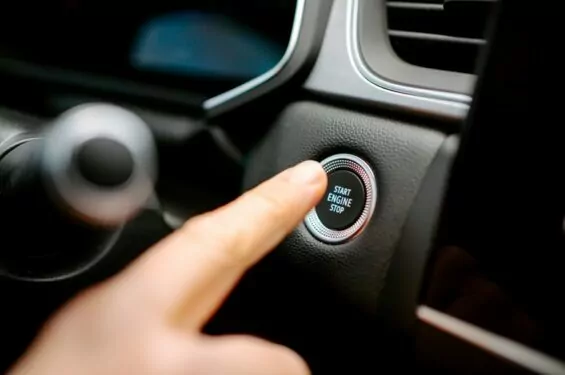
Driver pressing the Engine Start/Stop button in a Hyundai on a cold morning

Why Does My Car Make a Noise When I Start It? 10 Startup Sounds Explained

Why Does My Car Make a Noise When I Start It? 10 Startup Sounds Explained The short answer: Some startup noises are completely normal, like a brief fuel pump hum, a louder idle for the first minute, or light ticking from direct-injection fuel injectors. Others point to a problem. Clicking usually means a weak battery or bad starter, grinding points to the starter gear, squealing is often a worn drive belt, and ticking that doesn't go away can mean low oil. The guide below helps you tell the difference. Introduction You turn the key or press the start button, and instead of the usual smooth start, you hear something new. Maybe it's a rapid click-click-click. Maybe it's a high-pitched squeal or a metallic grind. Your first thought is probably, "Is this serious, and is it going to be expensive?" The good news is that your car's startup noises carry a lot of information. When you start a car, the battery, starter, charging system, drive belt, fuel system and engine all spring into action within a couple of seconds. A new or unusual sound during that moment usually points directly to which part needs attention. Catching it early is often the difference between a simple fix and a breakdown in a parking lot on a cold January morning. This guide walks through the startup sounds our service technicians hear about most, explains what each one usually means, and tells you how urgent it is. We'll also cover which noises are perfectly normal, why cold Kansas City mornings make startup noises worse, and what you can safely check yourself before you book a service appointment. Startup Noise Quick Reference Use this table to quickly match the sound you're hearing to its most likely cause. What you hear Most likely cause How urgent? Rapid clicking, engine won't crank Weak or dead battery, loose or corroded cables High: car may not start next time One loud click, then nothing Failing starter or starter solenoid High Grinding while cranking Starter gear not meshing properly with the flywheel High: can damage the flywheel Whirring or whining with no cranking Starter spinning without engaging the engine High Squealing or chirping for a few seconds Worn or slipping drive belt, tensioner or pulley Medium: check soon Slow, labored cranking ("rrr-rrr-rrr") Weak battery, often worse in the cold Medium to high Ticking that fades in seconds Oil reaching the valvetrain, or normal injector noise Low (monitor it) Ticking or tapping that doesn't fade Low oil level or pressure, lifter or valve issue High: check oil now Deep knocking Possible internal engine wear Very high: stop driving Rattling under the car Loose heat shield or exhaust part Low to medium Hissing under the hood Vacuum leak, or coolant or oil on a hot part Medium to high Normal Startup Sounds You Don't Need to Worry About Before we get to the problem noises, it helps to know which sounds are simply part of how a modern car works. A brief hum or buzz from the back of the car. When you switch the ignition on, the electric fuel pump runs for a moment to pressurize the fuel system. A short hum from around the fuel tank is normal. A louder, higher idle for the first minute. After a cold start, most engines deliberately idle faster to warm up the engine and the catalytic converter quickly. The engine will sound louder, then settle down within a minute or two. Light, even ticking from the engine. Many modern engines use gasoline direct injection (GDI). The high-pressure injectors and fuel pump make a soft, rhythmic ticking that's often most noticeable at idle and on cold starts. This is a normal operating sound. A click or buzz shortly after you drive off. Many vehicles run a quick self-test of the antilock braking system at low speed after startup, which can make a brief buzzing or clicking sound and sometimes a slight pulse in the brake pedal. Hybrid and EV sounds. In a Hyundai hybrid, the gas engine may stay off at startup and start or stop on its own while you drive. Electric vehicles are nearly silent, but they play an exterior sound at low speeds to alert pedestrians. You may also hear cooling fans or pumps working after you park or while charging. The rule of thumb: a normal sound is brief, consistent and the same every day. A sound that is new, getting louder, lasting longer or comes with a warning light deserves a closer look. 10 Startup Noises That Need Attention 1. Rapid Clicking When You Try to Start A fast "click-click-click" with little or no engine cranking is the most common startup complaint, especially in winter. It usually means the battery has enough power to activate the starter solenoid, but not enough to actually spin the engine. The solenoid engages, the voltage drops, it disengages, and the cycle repeats rapidly. Common causes: A weak or dead battery (the most likely cause) Loose or corroded battery terminals that block current An alternator that isn't recharging the battery while you drive What to do: Look at the battery terminals for white or blue-green crusty buildup and make sure the cables are tight. Turn on the headlights: if they're dim or fade when you try to start, the battery is the likely culprit. A jump-start will usually get you going. If the car dies again shortly after the jumper cables are removed, the alternator may not be charging. Either way, have the battery and charging system tested. Browse replacement options on our Hyundai batteries page. 2. A Single Loud Click, Then Nothing If you hear one solid click when you try to start, but the engine doesn't crank and your dashboard lights stay bright, the battery may be fine. The problem is more likely the starter motor or starter solenoid. The solenoid is trying to engage, but the starter motor isn't turning. What to do: Try a jump-start. If the car still won't crank with a known-good jump, the starter or its wiring is the likely cause. Starters usually last a long time, but they do wear out eventually. This repair needs a technician. 3. Grinding While the Engine Cranks A harsh, metallic grinding sound while you're starting the car usually comes from the starter. When you start the engine, a small gear on the starter slides out to mesh with a large toothed ring on the engine's flywheel (or flexplate) and spin it. If that gear is worn, or isn't sliding in and out properly, the teeth grind against each other instead of meshing cleanly. Common causes: A worn starter drive gear Loose starter mounting bolts Damaged teeth on the flywheel or flexplate Holding the key in the "start" position after the engine is already running What to do: Have it checked soon. Repeatedly starting the car while it grinds can chew up the flywheel teeth, which turns a starter repair into a much bigger job. 4. Whirring or Whining but the Engine Doesn't Turn Over If you hear a high-pitched whir or spin, like a small electric motor running freely, but the engine itself doesn't crank, the starter motor is spinning without engaging the flywheel. This is often called a "freewheeling" starter. If the whir continues briefly after the engine starts, the starter gear may not be retracting properly. What to do: This is a starter problem and won't fix itself. Schedule a repair before it leaves you stranded. 5. Squealing or Chirping for a Few Seconds A loud squeal or series of chirps right after the engine starts, especially on a cold or damp morning, is usually the serpentine belt (also called the drive belt or accessory belt). This rubber belt is driven by the engine and powers the alternator, the air conditioning compressor and, on some engines, the water pump. Common causes: A worn, cracked or glazed (shiny) belt that slips on the pulleys A weak belt tensioner that doesn't hold the belt tight A worn pulley bearing Moisture or cold temperatures that temporarily reduce grip What to do: A brief squeal on a humid or freezing morning that disappears in a few seconds is a warning sign, not an emergency. Don't ignore it, though. If the belt breaks, your battery stops charging, and on some engines the water pump stops too, which can cause overheating. Have the belt and tensioner inspected at your next service. 6. Slow, Labored Cranking If the engine turns over slowly, with a drawn-out "rrr... rrr... rrr" before it finally catches, your battery is likely struggling. This is especially common on the first cold mornings of the year. Cold weather hits batteries hard. According to AAA, a car battery is about 35 percent weaker at 32°F and loses about 60 percent of its strength at 0°F, while a cold engine needs about twice as much power to start because the oil is thicker. A battery that seemed fine all fall can suddenly struggle. What to do: Have the battery load-tested. AAA recommends testing once a battery is three years old and every year after. Slow cranking is often the last warning before a battery fails completely. For more cold-weather prep, see our Kansas City winter car prep checklist. 7. Ticking or Tapping From the Engine Engine ticking can be completely normal or a sign of a real problem, so it's worth paying attention to how it behaves. Usually normal: A light, steady tick from direct fuel injectors and the high-pressure fuel pump A tick that lasts only a few seconds after a cold start, then fades as oil pressure builds and reaches the top of the engine Needs attention: Ticking or tapping that continues after the engine warms up Ticking that has gotten louder over the past few weeks Ticking along with an oil pressure warning light or check engine light Persistent ticking can point to low oil level, low oil pressure, old or incorrect oil, or a valvetrain issue such as a worn lifter. A ticking sound that's loudest when cold and fades as the engine warms up can also come from a small exhaust manifold leak, since the metal expands and seals the gap once it heats up. What to do: Park on level ground, let the engine cool, and check the oil level on the dipstick. If it's low, top it off with the oil grade listed in your owner's manual and schedule a service visit to find out why. If you're overdue for an oil change, book one on our Hyundai oil change page. 8. Deep Knocking A deep, heavy knock from inside the engine, sometimes described as a "rod knock," is one of the most serious noises a car can make. It often gets louder as you rev the engine and can indicate worn internal bearings or another internal engine problem. Stop driving and call for service. Continuing to drive with a deep engine knock can cause catastrophic engine damage. Check your oil level, and if the oil light is on or the level is very low, don't restart the engine. Have the car towed. 9. Rattling From Underneath A tinny rattle or buzz from under the car at startup, especially at idle, is very often a loose heat shield. These thin metal panels protect the underbody from the hot exhaust, and their mounting points can rust or loosen over time, especially with road salt. A rattle can also come from a loose exhaust clamp or hanger, or occasionally from a failing catalytic converter. What to do: A loose heat shield isn't dangerous on its own, but it's annoying, and a technician can usually secure it quickly. A rattle that comes with a rotten-egg smell, reduced power or a check engine light should be checked sooner. 10. Hissing Under the Hood A hiss when you start the car, or right after you shut it off, can mean a few things: A vacuum leak: a cracked or disconnected vacuum hose can hiss and may cause a rough idle or check engine light. A coolant leak: coolant dripping onto a hot engine part can hiss and produce a sweet smell. Look for low coolant or puddles under the car. An oil leak: oil hitting the hot exhaust can hiss and smoke, with a burning smell. What to do: Check your coolant and oil levels with the engine cool, look for drips under the car, and watch the temperature gauge. If the engine starts to overheat, pull over safely and turn it off. Never open a hot radiator or coolant cap. Why Startup Noises Are Worse in Cold Weather If you notice your car sounds different on frosty mornings, there's a good reason. Cold affects nearly every system involved in starting the engine: The battery produces less power, so the starter turns more slowly or clicks. Engine oil thickens and takes a few extra seconds to reach the top of the engine, which can cause a brief tick. Rubber belts stiffen and lose grip, which can cause a short squeal. Metal parts contract, so small gaps such as an exhaust leak can tick until they warm up and expand. Kansas City's big temperature swings, with mild afternoons followed by freezing nights, make these issues pop up suddenly. If a noise appears only on cold mornings and disappears once warm, it's still worth mentioning at your next service. It's often the first sign of a part that's starting to wear. Hyundai Startup Tips Push-button start won't work? Make sure your foot is firmly on the brake and the shifter is in Park. If the dash says the key isn't detected, the smart key battery may be low. On most Hyundai models, you can hold the smart key fob directly against the Engine Start/Stop button to start the car. Check your owner's manual for your model's exact steps. Hybrid doesn't make engine noise at startup? That's normal. When you press the start button on a Hyundai hybrid, the "Ready" light comes on, and the gas engine may stay off until it's needed. Learn more in our guide: Do Hyundai hybrids need to be plugged in? Use remote start in winter. If your Hyundai has remote start through the key fob or the Hyundai Blue Link app, starting the car a few minutes early lets the cabin and windows warm up. Never use remote start in a closed garage. Check your warranty. Depending on your vehicle's age and mileage, some starting and engine components may be covered under your Hyundai warranty. See our Hyundai warranty page for details. What You Can Check at Home Before Calling a Mechanic You don't need tools or experience to gather useful information. These simple steps can help you and your technician pin down the problem faster: Record the sound. Take a short video on your phone while someone else starts the car. Sounds are hard to describe, and they don't always happen on cue at the service center. Note when it happens. Is it only on cold mornings? Every start? Only after the car sits for a few days? Does it go away when the engine warms up? Check your dashboard. Note any warning lights, such as the battery, oil pressure, temperature or check engine light. Check the oil level. With the engine off and cool, pull the dipstick, wipe it, reinsert it fully and check that the oil sits between the marks. Look at the battery. Check the terminals for corrosion and make sure the cables are tight. Look for a date sticker to see how old it is. Watch the headlights. Turn them on before starting. If they dim sharply while cranking, the battery is likely weak. Get help right away if you notice: A deep knocking sound from the engine The oil pressure light or temperature warning light on Smoke from under the hood, or a strong burning smell A flashing check engine light, which can signal a serious misfire Hear Something New? Let Our Technicians Take a Listen Our Hyundai-certified technicians at McCarthy Olathe Hyundai can test your battery and charging system, inspect your starter and drive belt, and track down the source of any new noise using genuine Hyundai parts. Bring your phone video along; it helps. Schedule Service View Service Specials Frequently Asked Questions Why does my car click but not start? Rapid clicking usually means the battery has enough power to activate the starter solenoid but not enough to turn the engine, which points to a weak or dead battery or loose, corroded battery cables. A single loud click with no cranking more often points to a failing starter or solenoid. A jump-start helps tell them apart: if the car starts with a jump, the battery or charging system is the likely cause. Is it normal for my engine to be loud when I first start it? Yes. Most modern engines idle at higher RPM for the first minute or so after a cold start to warm up the engine and catalytic converter quickly, which makes them sound louder. The idle should settle down within a minute or two. If the engine stays loud, roars when warm, or the check engine light comes on, have it inspected. Why does my car squeal when I start it in the morning? A squeal that lasts a few seconds after a cold start is usually the serpentine (drive) belt slipping because it is worn, glazed, loose, or damp from cold or humid weather. It can also come from a worn belt tensioner or pulley. Have it checked soon, because the drive belt powers the alternator and other accessories. Is engine ticking on a cold start bad? Not always. Many modern direct-injection engines make a light ticking sound from their fuel injectors and high-pressure fuel pump, which is normal. A tick that fades within a few seconds as oil pressure builds is also common. Ticking that gets louder, lasts after warm-up, or comes with low oil or a warning light should be checked right away. Start by checking your oil level. Can cold weather cause my car to make noise when starting? Yes. Cold weather thickens engine oil, stiffens rubber belts and weakens the battery. According to AAA, a battery is about 35 percent weaker at 32 degrees and about 60 percent weaker at zero degrees, while the engine needs about twice as much power to start. That can cause slow cranking, clicking, belt squeal and brief ticking on cold mornings. Should I keep driving if my car makes a grinding noise when starting? Get it checked soon. Grinding during or right after starting often means the starter gear isn't engaging or disengaging properly from the engine's flywheel. Continuing to start the car this way can damage the flywheel teeth, which turns a starter repair into a much more expensive job. Why won't my Hyundai push-button start work? Make sure your foot is firmly on the brake and the vehicle is in Park. If the dashboard says the key is not detected, the smart key battery may be low. Hold the smart key fob directly against the Engine Start/Stop button and press the button; check your owner's manual for the exact procedure on your model. Conclusion Your car's startup sounds are an early warning system. A brief hum, a faster idle and light injector ticking are normal parts of how modern engines work. But rapid clicking, grinding, whirring, squealing, persistent ticking or deep knocking are your car's way of telling you something needs attention, usually the battery, starter, drive belt or oil. Most of these problems are much easier and less expensive to fix when they're caught early, before the battery dies completely or the starter damages the flywheel. If you're hearing something new, record it, check the basics, and let a professional take a listen. Hearing a noise while you drive, too? Read our guide to 6 weird car sounds and what they could mean, or schedule service at McCarthy Olathe Hyundai and we'll find the cause.

2026 Hyundai Tucson Hybrid driving on a suburban road in Olathe, Kansas

Do Hyundai Hybrids Need to Be Plugged In? Hybrid vs Plug-In Hybrid vs EV Explained

Do Hyundai Hybrids Need to Be Plugged In? Hybrid vs Plug-In vs EV Do Hyundai Hybrids Need to Be Plugged In? Hybrid vs Plug-In Hybrid vs EV Explained Short answer: no. Regular Hyundai hybrids, including the Elantra Hybrid, Sonata Hybrid, Tucson Hybrid, Santa Fe Hybrid and Palisade Hybrid, don't have a charging port and never need to be plugged in. They recharge their own batteries while you drive. Only the Tucson Plug-in Hybrid and Hyundai's all-electric IONIQ and Kona Electric models plug in. Introduction "Do I have to plug it in?" is one of the most common questions we hear from shoppers looking at a Hyundai hybrid. It's an understandable mix-up. Hybrids, plug-in hybrids and electric vehicles all use batteries and electric motors, and the names sound alike. But how you live with each one day to day, and how you fuel it, is very different. The difference matters most if you don't have a garage outlet, you rent your home, or you drive long distances across Kansas and Missouri where chargers are spread out. Picking the wrong type can mean paying for capability you won't use, or ending up with a car that doesn't fit your routine. This guide explains how each type of Hyundai works, whether it needs to be plugged in, what fuel economy and range to expect from the 2026 lineup, and how to decide which is right for you. All figures are EPA estimates for 2026 models, and your actual results will vary with how and where you drive. The Three Types of Electrified Hyundai at a Glance Hybrid (HEV) Plug-in Hybrid (PHEV) Electric (EV) Needs to be plugged in? No, never Optional, but recommended Yes, always Uses gasoline? Yes Yes, after the battery runs low No All-electric driving Short bursts at low speed About 32 miles (Tucson PHEV) Every mile Battery size Small Medium (13.8 kWh in Tucson PHEV) Large Range anxiety? None None Plan around charging 2026 Hyundai models Elantra Hybrid, Sonata Hybrid, Tucson Hybrid, Santa Fe Hybrid, Palisade Hybrid Tucson Plug-in Hybrid IONIQ 5, IONIQ 6, IONIQ 9, Kona Electric How a Regular Hyundai Hybrid Works (No Plug Required) A standard hybrid, sometimes called a "self-charging" hybrid, pairs a gas engine with an electric motor and a small battery. You fill it up at the gas station just like any other car. There's no charging port, no cord and nothing new to learn. The battery charges in two ways: Regenerative braking: When you slow down or coast, the electric motor works in reverse as a generator. It turns the energy that would normally be lost as heat in the brakes into electricity and stores it in the battery. The gas engine: When the battery needs it, the engine sends some of its power to recharge the battery while you drive. The car's computer then decides, moment by moment, how to use that stored energy. The electric motor helps the engine when you accelerate, which is when a gas engine is least efficient. At low speeds, such as pulling out of a parking spot or creeping through traffic on 119th Street, the hybrid can run on electricity alone with the engine off. At a red light, the engine shuts down completely. That's where the fuel savings come from. Hybrids shine in stop-and-go city and suburban driving, where there's lots of braking to recapture and lots of idling to eliminate. Good to know: Hyundai hybrids use a conventional multi-speed transmission instead of the continuously variable transmission (CVT) used in many competing hybrids. Many drivers find this makes them feel more like a regular gas car when accelerating. 2026 Hyundai Hybrid Fuel Economy Model Type Seats EPA combined MPG Elantra Hybrid Compact sedan 5 54 (Blue); 50 (SEL Sport, Limited) Sonata Hybrid Midsize sedan 5 Up to 51 (Blue) Tucson Hybrid Compact SUV 5 38 (Blue SE AWD); 36 (other AWD trims) Santa Fe Hybrid Midsize 3-row SUV 6–7 36 (FWD); 34 (AWD) Palisade Hybrid Large 3-row SUV 7–8 Up to 34 EPA estimates for 2026 models. Actual mileage will vary with options, driving conditions, driving habits and vehicle condition. Palisade Hybrid figure is the best-case rating; AWD upper trims are rated lower (29 mpg combined for the AWD Calligraphy). Put those numbers in context: a gas-only 2026 Santa Fe with front-wheel drive is rated at 24 mpg combined. The Santa Fe Hybrid's 36 mpg rating means it can go roughly 50 percent farther on a gallon, with no change at all to how you fuel it. Hybrid power doesn't mean giving up performance, either. The new Palisade Hybrid pairs a 2.5-liter turbocharged engine with two electric motors for 329 horsepower and 339 lb-ft of combined torque, more than the 287-hp V6 in the standard Palisade. It can still tow up to 4,000 pounds with trailer brakes. See every hybrid we carry on our Hyundai hybrid cars page. How a Hyundai Plug-In Hybrid Works A plug-in hybrid (PHEV) is a hybrid with a much larger battery and a charging port. Hyundai's 2026 plug-in hybrid is the Tucson Plug-in Hybrid. Its 13.8-kWh battery gives it an EPA-estimated 32 miles of all-electric range. Here's how it works in practice. You plug it in overnight at home. The next morning, you start with a full battery and drive on electricity alone for roughly the first 30 miles. For many people in Olathe and Overland Park, that covers the daily commute, school drop-off and errands without using a drop of gas. When the battery runs low, the Tucson PHEV automatically switches to hybrid mode and keeps going like a regular hybrid, earning an EPA-estimated 35 mpg combined. Do you have to plug in a plug-in hybrid? No. A plug-in hybrid will drive perfectly well if you never charge it. It simply acts like a regular hybrid. But if you never plug it in, you're carrying a bigger, heavier battery without getting its main benefit. A PHEV makes the most sense when you can charge it regularly. How long does it take to charge? Level 2 (240-volt) charger: About 2 hours from empty to full on the Tucson PHEV. This is the type of charger you'd install in a garage or find at many workplaces and shopping centers. Level 1 (standard 120-volt household outlet): Much slower, but with a battery this size, plugging in overnight on an ordinary outlet is enough for many owners. For 2026, Hyundai upgraded the Tucson Plug-in Hybrid's included charging cable to a combination Level 1/Level 2 cord, so you can use it with either a standard outlet or a 240-volt outlet. How a Hyundai Electric Vehicle Works A battery electric vehicle (EV) has no gas engine at all. It runs entirely on electricity stored in a large battery pack, which you recharge by plugging in at home, at work or at a public charging station. EVs produce no tailpipe emissions and need no oil changes. Hyundai's 2026 EV lineup includes: IONIQ 5: A midsize electric crossover with an EPA-estimated range of up to 318 miles on Long Range versions, or 245 miles for the SE Standard Range. The rugged XRT is rated at up to 259 miles. IONIQ 9: Hyundai's first three-row EV, with a 110.3-kWh battery and up to 335 miles of EPA-estimated range. On a 350-kW DC fast charger it can charge from 10 to 80 percent in about 24 minutes, and it can tow up to 5,000 pounds. Kona Electric: A subcompact electric SUV. The 2026 SE uses a 48.6-kWh battery with an EPA-estimated 200 miles of range. IONIQ 6: A sleek electric sedan. Ask us about current availability and trims. Most EV owners do the bulk of their charging at home overnight on a Level 2 charger, then use DC fast chargers on road trips. Learn more on our Hyundai EV research page or browse the IONIQ 5. Hybrid vs Plug-In Hybrid vs EV: Pros and Cons Regular Hybrid Pros: No change to your routine, no charging equipment needed, big fuel savings in city driving, no range anxiety, typically the lowest price of the three. Cons: Still burns gasoline on every trip; savings are smaller on steady highway drives. Plug-In Hybrid Pros: Gas-free commuting for short daily drives, plus unlimited range on road trips. A good stepping stone to electric driving. Cons: Costs more than a regular hybrid; you need regular access to a plug to get the full benefit; the bigger battery takes up some cargo space. Electric Vehicle Pros: No gas or oil changes, quiet and quick acceleration, lowest cost per mile when charging at home, and features like vehicle-to-load (V2L) power on many models. Cons: Requires home or reliable public charging; road trips need some charging planning; range drops noticeably in cold weather. Which Type Is Right for You? The right choice comes down to two questions: Can you charge at home? and How far do you drive each day? Your situation Best fit No garage or home outlet; you live in an apartment or rent Regular hybrid Long highway commutes or frequent road trips across Kansas Regular hybrid Short daily commute (under about 30 miles) and you can charge at home Plug-in hybrid Want to try electric driving without giving up gas backup Plug-in hybrid Home charging and mostly local driving; want zero gas Electric vehicle Need a 3-row family SUV with great fuel economy Santa Fe Hybrid or Palisade Hybrid; IONIQ 9 if you can charge at home If you're unsure, a regular hybrid is the safest choice. It saves fuel for nearly every driver, in every situation, without requiring anything new from you. Hybrids and EVs in Kansas City Weather Kansas City summers are hot, and winters bring single-digit cold snaps. Here's how each type handles the extremes. Regular hybrids barely notice. Because you refuel at a gas station, cold weather doesn't change your routine. You may see slightly lower winter fuel economy, since the engine runs more often to warm itself and heat the cabin. That's normal. Plug-in hybrids will deliver fewer electric miles in cold weather, but the gas engine is always there as backup, so you'll never be stranded. EVs are the most affected. In AAA testing, electric vehicle range dropped an average of 41 percent at 20°F with the heater running. You can reduce that by keeping the car plugged in overnight and preconditioning the cabin while it's still connected. For more cold-weather tips, read our Kansas City winter car prep checklist. Need all-weather grip? The Tucson Hybrid, Santa Fe Hybrid and Palisade Hybrid are all available with HTRAC all-wheel drive. Hybrid Batteries: Lifespan, Warranty and Maintenance A common worry is whether the hybrid battery will wear out and need an expensive replacement. Modern hybrid batteries are designed to last the life of the vehicle under normal use, and Hyundai backs them with strong coverage. Hyundai's hybrid battery warranty is 10 years or 100,000 miles in most states, extended to 10 years or 150,000 miles in California and states that follow its emissions rules. Details are on our Hyundai warranty page. Day-to-day maintenance on a Hyundai hybrid is very similar to a gas model: oil changes, tire rotations, cabin and engine air filters, and periodic inspections. In fact, regenerative braking means the electric motor handles much of the work of slowing the car, which often helps brake pads last longer. Like any car, a hybrid also has a regular 12-volt battery that should be tested every year once it's a few years old. When it's time for service, our Hyundai-certified technicians are trained on hybrid and electric systems. Schedule service online. Common Myths About Hybrids and Plug-Ins Myth: "I'll need to install a charger for a hybrid." False. A regular hybrid has no plug. You'll never need a charger. Myth: "Hybrids are slow." Not anymore. Electric motors deliver instant torque, which often makes hybrids feel quicker off the line. The Palisade Hybrid makes more horsepower than the gas V6 model. Myth: "A plug-in hybrid stops working if the battery dies." False. When the battery is depleted, it runs as a regular hybrid on gasoline. Myth: "Hybrids can't tow." Hyundai hybrid SUVs can. The Santa Fe Hybrid is rated for up to 2,000 pounds and the Palisade Hybrid for up to 4,000 pounds with trailer brakes. Myth: "Hybrid batteries need to be replaced every few years." Hybrid batteries are built to last and are covered by Hyundai's 10-year/100,000-mile hybrid battery warranty. Test Drive a Hyundai Hybrid in Olathe The easiest way to understand how a hybrid feels is to drive one. Stop by McCarthy Olathe Hyundai to compare a hybrid, a plug-in hybrid and an EV back to back. Our team will walk you through which one fits your commute and how you'll fuel it. Shop Hyundai Hybrids Explore Hyundai EVs Frequently Asked Questions Do Hyundai hybrids need to be plugged in? No. Regular Hyundai hybrids, including the Elantra Hybrid, Sonata Hybrid, Tucson Hybrid, Santa Fe Hybrid and Palisade Hybrid, have no charging port. Their batteries recharge automatically from the gas engine and from regenerative braking. Only the Tucson Plug-in Hybrid and Hyundai's electric vehicles are designed to be plugged in. What happens if you never plug in a plug-in hybrid? It still drives normally. A plug-in hybrid like the Tucson Plug-in Hybrid works like a regular hybrid when its battery is depleted, earning an EPA-estimated 35 mpg combined. You simply miss out on its roughly 32 miles of all-electric driving, which is where most of the fuel savings come from. Can a Hyundai hybrid drive on electric power only? Yes, briefly. A regular Hyundai hybrid can run on electric power alone at low speeds, such as pulling away from a stop or creeping through traffic, and the engine shuts off when it isn't needed. It cannot drive long distances on electricity alone. The Tucson Plug-in Hybrid can drive about 32 miles on electricity before the engine starts. Which Hyundai hybrid gets the best gas mileage? The 2026 Elantra Hybrid Blue has the highest rating at an EPA-estimated 54 mpg combined. The 2026 Sonata Hybrid Blue is rated at 51 mpg combined. Among SUVs, the Tucson Hybrid Blue SE leads at 38 mpg combined. How long do Hyundai hybrid batteries last? Hybrid batteries are designed to last the life of the vehicle under normal use. Hyundai backs its hybrid battery with a 10-year/100,000-mile warranty in most states (10 years/150,000 miles in California and states that follow its emissions rules). Confirm coverage for your specific vehicle with your dealer. Is a hybrid or EV better for Kansas City winters? Both work well. A regular hybrid is the most worry-free choice because cold weather doesn't affect where or how you refuel; you may just see a small dip in winter fuel economy. EVs lose more range in the cold, so they suit drivers who can charge at home overnight and precondition the cabin while plugged in. Do Hyundai hybrids cost more to maintain? Not usually. Hyundai hybrids follow a maintenance schedule similar to gas models, with oil changes, tire rotations and filters. Regenerative braking often reduces brake pad wear because the electric motor does part of the work of slowing the car. Conclusion If you've been holding off on a hybrid because you don't want to deal with charging, you can stop worrying. Regular Hyundai hybrids never need to be plugged in. You drive and refuel them exactly like a gas car and enjoy far better fuel economy, up to 54 mpg combined in the Elantra Hybrid and up to 38 mpg in the Tucson Hybrid. If you can charge at home, a plug-in hybrid like the Tucson Plug-in Hybrid lets you handle most daily driving on electricity with gas as backup. And if you're ready to leave gas behind entirely, the IONIQ 5, IONIQ 9 and Kona Electric are all-electric options with real-world range for Kansas City life. Not sure which one fits? Visit McCarthy Olathe Hyundai, and we'll help you compare them side by side. Start by browsing our Hyundai hybrid lineup.

Hyundai SUV covered in fresh snow outside a Kansas City home on a winter morning

Winter-Proof Your Hyundai: A Kansas City Winter Car Prep Checklist

Winter-Proof Your Hyundai: Kansas City Winter Car Prep Checklist Winter-Proof Your Hyundai: A Kansas City Winter Car Prep Checklist The short version: Before the first hard freeze, test your battery, check tire pressure and tread, top off coolant and winter washer fluid, replace worn wipers, confirm your lights and brakes work, and pack a winter emergency kit. If you drive a Hyundai EV or hybrid, learn your preconditioning and charging habits too. The full 12-step checklist is below. Introduction Kansas City winters are hard to predict. One week it's 55 degrees and sunny on the Plaza; the next, an Arctic front drops overnight lows into the single digits and coats I-35 with ice. The National Weather Service puts Kansas City's normal seasonal snowfall at about 19 inches, and the city's record low is a bitter -23°F. Snow totals are only part of the story. Rapid temperature swings, freezing drizzle, road salt and sub-zero wind chills all wear on your vehicle. Cold weather is hard on cars. Batteries lose power, tires lose air, fluids thicken, rubber wiper blades stiffen and crack, and small problems you ignored in September become the reason your car won't start in January. The good news is that almost every winter breakdown is preventable with an hour or two of preparation in the fall. This guide is written for Hyundai owners in Olathe, Overland Park, Lenexa, Shawnee and across the Kansas City metro. It combines guidance from AAA and the National Highway Traffic Safety Administration (NHTSA) with what our service technicians see every winter. You'll find a 12-step checklist, Hyundai-specific tips for EVs, hybrids and AWD models, an emergency kit list, and answers to the questions we hear most often at the service counter. When Should You Winterize Your Car in Kansas City? The best window is late October through mid-November, before the first hard freeze. Waiting until the first snow means waiting in line, because every other driver in the metro has the same idea. Service departments and tire shops get busiest the week after the first cold snap, when dead batteries and low-tire-pressure warnings pile up. A simple rule: if overnight temperatures are starting to dip into the 30s, it's time. Schedule your inspection while it's still mild, so any repairs can be done before you depend on your car in freezing weather. Your 12-Step Hyundai Winter Prep Checklist Print this list or save it to your phone. Most items take only a few minutes. A few, like the battery test and brake inspection, are best left to a technician. Test the 12-volt battery and clean the terminals Check tire pressure and tread depth (and consider winter tires) Check coolant/antifreeze level and protection Change the oil if you're due, using the grade in your owner's manual Replace worn wiper blades and fill up with winter-rated washer fluid Test every headlight, taillight, brake light and turn signal Have the brakes inspected Test the heater, defroster and rear window defogger Inspect belts and hoses for cracks Protect the paint and underbody from road salt Check for open recalls and complete any due maintenance Pack a winter emergency kit 1. Test Your Battery Before the First Cold Snap Dead batteries are the most common winter breakdown, and the reason is simple chemistry. According to AAA, a car battery is about 35 percent weaker at 32°F and loses about 60 percent of its strength at 0°F. At the same time, a cold engine needs about twice as much power to start because the oil is thicker. A battery that started your car fine all summer can fail on the first single-digit morning. AAA recommends having your battery tested once it is three years old, then every year after that. A proper load test takes just a few minutes and shows whether the battery can still deliver enough cranking power. While it's being tested, have the terminals checked for white or blue-green corrosion, which can stop current from flowing even if the battery itself is healthy. Warning signs your battery is on its way out: The engine cranks slowly or sounds sluggish when you start it Headlights dim when the car is idling The battery warning light comes on You've needed a jump start recently The battery is more than three years old Short trips make things worse, because the alternator doesn't have time to recharge the battery fully. If most of your winter driving is quick runs to school or the grocery store, try to take a longer drive at least once a week. Shop replacement options on our Hyundai batteries page. Hearing new noises when you start your car? A clicking or grinding sound on a cold morning often points to the battery or starter. Our guide to 6 weird car sounds and what they could mean explains the most common ones. 2. Check Tire Pressure and Tread Depth Tires are the only part of your car that touches the road, and winter is when they matter most. Two things change when temperatures drop. Pressure drops. Tire pressure falls about 1 PSI for every 10°F the temperature drops. A typical Kansas City cold front can swing temperatures 40 degrees in a day, which can take 4 PSI out of every tire overnight. That's often enough to trigger your tire pressure monitoring (TPMS) light. Underinflated tires grip less, wear faster and hurt fuel economy. Check pressure at least once a month in winter, ideally in the morning before you drive, when the tires are cold. Inflate to the number on the sticker inside your driver's door jamb, not the maximum pressure printed on the tire sidewall. Tread matters more. NHTSA sets 2/32 inch as the bare minimum tread depth, but AAA notes that traction drops noticeably on wet and snowy roads once tread falls below 4/32 inch. You can check it with a quarter: insert it upside down into a tread groove. If you can see the top of George Washington's head, you have less than 4/32 inch and it's time to shop for tires before winter. Tread depth Coin test What it means for winter 6/32" or more Tread covers well past the top of Washington's head on a quarter Good grip in rain and light snow 4/32" Tread just reaches the top of Washington's head (quarter) Snow and wet traction noticeably reduced; plan to replace 2/32" Tread just reaches the top of Lincoln's head (penny) Legal minimum; replace now All-season or winter tires? Many Kansas City drivers get through winter on quality all-season tires with healthy tread. Dedicated winter tires use softer rubber and deeper, more open tread that stays flexible in freezing temperatures, and they stop and turn far better on snow and ice. They're worth considering if you commute before sunrise, drive hilly or rural roads in Johnson or Miami County, or simply can't work from home on snow days. Don't forget to check the spare, too. Find the right set with our Hyundai tire center. 3. Check Your Coolant (Antifreeze) Coolant does double duty. It keeps your engine from overheating in summer and keeps the liquid in the cooling system from freezing in winter. Frozen coolant can crack an engine block or radiator, which is an expensive repair. With the engine cold and off, look at the coolant overflow reservoir under the hood. The level should sit between the MIN and MAX lines. Never open the radiator cap on a hot engine. A technician can test the coolant's freeze protection in a minute with a hydrometer or test strip. Most vehicles use a 50/50 mix of coolant and distilled water, but always use the coolant type Hyundai specifies in your owner's manual, since mixing incompatible types can cause problems. 4. Stay on Top of Oil Changes Cold oil is thicker and flows more slowly, which is part of why your engine works harder to start in winter. Fresh oil of the correct grade reaches critical engine parts faster on a cold start. Many current Hyundai engines use low-viscosity oil designed to flow well in cold temperatures, but the exact grade varies by engine, so follow the specification in your owner's manual. If you're within a few hundred miles of your next scheduled oil change, do it before winter rather than after. Book online on our Hyundai oil change page. If your Hyundai is covered by Hyundai Complimentary Maintenance, check whether your next oil service is included. 5. Replace Wiper Blades and Use Winter Washer Fluid Visibility is a safety issue that's easy to overlook. Road salt spray, slush and low winter sun can make your windshield nearly impossible to see through within minutes on the highway. Wiper blades: If they streak, chatter, skip or leave unwiped areas, replace them. Most blades last 6 to 12 months, and summer heat often damages them before winter even starts. Winter-style blades with a rubber boot resist ice buildup. Washer fluid: Summer "bug wash" fluid can freeze in the reservoir and lines. Use a winter-rated fluid with de-icer, and keep a spare jug in the trunk. You'll go through more than you expect on salty roads. Glass: Clean the inside of your windshield too. Interior film makes fogging and glare much worse. Never pour hot water on an icy windshield. The sudden temperature change can crack the glass. Use your defroster and an ice scraper instead. If your car has automatic wipers, switch them off before you turn the car off on a snowy night so they don't try to sweep through ice the next morning. 6. Test All Your Lights Winter brings the shortest days of the year, so you'll be driving in the dark more often. Walk around your car with a friend (or reflect off a garage door) and check headlights on both low and high beam, taillights, brake lights, turn signals, hazard lights and fog lights if you have them. Replace burned-out bulbs, and if your headlight lenses have gone cloudy or yellow, have them restored. Clouded lenses can noticeably cut how far you see at night. On snowy days, brush snow off your headlights and taillights, not just your windshield. Other drivers need to see you as much as you need to see them. 7. Get Your Brakes Inspected Stopping distances increase on wet, snowy and icy pavement, so your brakes need to be in top shape. A technician will check pad thickness, rotor condition and brake fluid. Get your brakes looked at sooner if you notice: Squealing, squeaking or grinding when you brake A soft, spongy or low brake pedal Vibration or pulsing through the pedal or steering wheel The car pulling to one side when you stop A brake warning light on the dashboard Learn more or schedule service on our Hyundai brake service page. 8. Test the Heater, Defroster and Rear Defogger Don't wait for the first frosty morning to find out your defroster isn't working. Run the heat on high, switch between the floor, dash and windshield vents, and turn on the rear window defogger. If the heater blows lukewarm air, it can point to low coolant or a thermostat problem. A musty smell or weak airflow often means a clogged cabin air filter, which also makes windows fog up faster. It's an inexpensive part to replace. If your Hyundai has heated seats, a heated steering wheel or heated side mirrors, make sure they all work now. 9. Inspect Belts and Hoses Cold temperatures make rubber harder and more brittle. Look for cracks, fraying, glazing or bulges on the drive belt and coolant hoses. A failed belt or burst hose can leave you stranded, and on a single-digit day that's more than an inconvenience. Your technician will check these during a multi-point inspection. 10. Protect Your Paint and Underbody From Road Salt Kansas and Missouri road crews rely heavily on salt and brine to keep highways clear. Salt is great for traction but hard on your car. It speeds up corrosion on brake lines, exhaust parts, the underbody and any paint chips. Wash and wax your car before winter to give the paint a protective layer. Touch up paint chips so salt can't reach bare metal. During winter, wash your car regularly, especially after a snowstorm, and choose a wash with an underbody rinse. Swap in all-weather floor mats that fit your vehicle and lock into the factory retention clips, so they trap slush and can't slide under the pedals. 11. Check for Recalls and Catch Up on Maintenance Before winter, check whether your vehicle has any open recalls by entering your VIN at NHTSA's recall lookup or on Hyundai's owner site. Recall repairs are performed at no cost at any authorized Hyundai dealer. While you're at it, look at your maintenance schedule. If you're due for a service in the next month or two, handling it now means one less thing to worry about when the weather turns. Our technicians can do a full winter inspection at the same visit. Schedule service online in a couple of minutes, and check our current service specials first. 12. Pack a Winter Emergency Kit Even a well-maintained car can get stuck in a ditch on K-10 or stranded behind a jackknifed semi on I-435. NHTSA recommends keeping these items in your vehicle all winter: Category What to pack Snow and ice Ice scraper, snow brush, small folding shovel Traction Bag of sand or non-clumping cat litter, or traction mats Power and light Jumper cables or portable jump starter, flashlight with spare batteries, phone charging cable or power bank Visibility Reflective warning triangles or road flares, bright cloth to tie to the antenna or door Warmth Blankets, gloves, hats, extra socks and a warm layer for each passenger Supplies Water bottles (fill only partway so they don't burst if frozen), non-perishable snacks, first-aid kit, any necessary medications Extras Spare jug of winter washer fluid, paper towels, basic tool kit Keep your gas tank close to full in winter. It gives you a reserve if you're stuck in traffic, and it helps prevent moisture from condensing in the tank. Winter Tips for Hyundai EV and Hybrid Owners Electric and hybrid Hyundais handle winter well, but cold weather changes how you should charge and drive them. Expect Less Range and Plan For It All lithium-ion batteries are less efficient in the cold, and running the cabin heater uses energy that would otherwise go to driving. In AAA testing, electric vehicle range dropped an average of 41 percent at 20°F when the heater was used. Your real-world loss depends on temperature, speed and how much heat you run, but it's smart to build a bigger buffer into longer winter trips. Precondition While You're Plugged In Hyundai EVs such as the IONIQ 5, IONIQ 6, IONIQ 9 and Kona Electric let you warm the cabin before you leave using the Hyundai Blue Link app or a scheduled climate setting. Doing this while the car is still plugged in uses power from the wall instead of your battery, so you start the drive warm with more range left. NHTSA also recommends keeping EVs and hybrids plugged in overnight in cold weather, which helps the battery stay in its best temperature range. Use Seat and Steering Wheel Heat Heated seats and a heated steering wheel warm you directly and use far less energy than heating all the air in the cabin. Many drivers find they can turn the cabin temperature down a few degrees and stay just as comfortable, which saves range. Warm the Battery Before Fast Charging A cold battery charges more slowly. On Hyundai EVs that support battery conditioning, entering a DC fast charger as your navigation destination lets the car begin warming the battery on the way, so charging speeds are better when you arrive. Check your owner's manual for how your model handles this. Hybrid Owners Hyundai hybrids, including the Tucson Hybrid, Santa Fe Hybrid, Elantra Hybrid and Sonata Hybrid, charge their own batteries and never need to be plugged in. In cold weather the gas engine may run more often to warm the engine and cabin, so a small dip in winter fuel economy is normal. The 12-volt battery that starts the hybrid system still needs testing just like in a gas car. Shopping for a winter-capable hybrid? Explore the Hyundai Tucson and Hyundai Santa Fe, both offered as hybrids with available all-wheel drive. Get the Most From Your Hyundai's Winter Features Many Hyundai models come with features that make winter mornings easier. Spend five minutes learning how yours work before you need them. Remote start and climate control: With an active Blue Link subscription, compatible Hyundais can start remotely and set the cabin temperature from your phone, so the car is defrosted and warm when you get in. HTRAC all-wheel drive: Available on models including the Kona, Tucson, Santa Fe and Palisade, HTRAC sends power to the wheels with the most grip. Many AWD models also offer a Snow drive mode that softens throttle response to reduce wheel spin. Heated and ventilated features: Depending on trim, heated front and rear seats, a heated steering wheel, heated side mirrors and a windshield wiper de-icer can all make cold mornings far more comfortable. Driver assistance: Hyundai SmartSense features like Forward Collision-Avoidance Assist and Blind-Spot Collision-Avoidance Assist are helpful in winter, but snow and ice can block the front radar and cameras. Keep the front grille emblem area, windshield and side mirrors clear of snow so the systems work as designed. Remember: all-wheel drive helps you accelerate on slippery roads, but it doesn't help you stop or turn any faster. Good tires and slower speeds do that. Safe Winter Driving Tips for Kansas City Roads Preparation keeps your car running. These habits help keep you safe once you're out on the road: Clear all the snow, including the roof, hood, lights and the area around your cameras and sensors. Snow sliding off your roof can blind you or the driver behind you. Clear the tailpipe before starting the car if it's been buried. A blocked exhaust can push carbon monoxide into the cabin. Never warm up a car in a closed garage. Warm up briefly, not for 20 minutes. Modern engines need only about 30 seconds to a minute before you can drive gently. The engine warms up faster while driving. Slow down and leave more room. Stopping on snowy or icy pavement takes much longer. Leave several seconds of following distance. Watch for black ice on bridges, overpasses, shaded curves and ramps, which freeze first. Brake correctly. With antilock brakes, press firmly and steadily and let the system work. Don't pump the pedal. Give snowplows space. Don't crowd or drive beside a plow, and pass only when it's safe. If you get stranded, stay with your vehicle, tie a bright cloth to the antenna or door, run the engine only occasionally for heat with a window slightly cracked, and keep the tailpipe clear. Check conditions before you leave using KanDrive (Kansas) or MoDOT's Traveler Information Map (Missouri), and tell someone your route on longer trips. For parents: Bulky winter coats can keep a car seat harness from fitting snugly. Dress kids in thin, warm layers, buckle them in, then lay a coat or blanket over the harness. Get a Winter Inspection at McCarthy Olathe Hyundai Our factory-trained Hyundai technicians will test your battery, check your tires, fluids, brakes, belts and hoses, and make sure your Hyundai is ready for whatever a Kansas City winter brings. Book before the first cold snap and skip the rush. Schedule Service View Service Specials Frequently Asked Questions When should I get my car ready for winter in Kansas City? Aim for late October to mid-November, before the first hard freeze and first measurable snow. That gives you time to replace a weak battery, swap tires and top off fluids before cold weather arrives, instead of after your car fails to start on the first sub-freezing morning. How much does cold weather affect a car battery? According to AAA, a car battery is about 35 percent weaker at 32 degrees and loses about 60 percent of its strength at zero degrees, while the engine needs about twice as much power to start. AAA recommends having your battery tested once it is three years old and every year after that. Why does my tire pressure light come on when it gets cold? Tire pressure drops about 1 PSI for every 10-degree drop in temperature. A 40-degree overnight swing can lower your tires by about 4 PSI, which is often enough to trigger the tire pressure monitoring light. Inflate to the pressure on your driver's door jamb sticker, not the maximum printed on the tire, and check it when the tires are cold. Do I need winter tires in Kansas City? Most Kansas City drivers do fine with good all-season tires that have plenty of tread, since the area averages about 19 inches of snow a season. Winter tires are worth considering if you drive early in the morning, commute on hilly or rural roads, or can't stay home on snow days. Whatever you choose, replace tires that are at or below 4/32 inch of tread before winter. How can I help my Hyundai EV keep its range in winter? Keep it plugged in overnight, precondition the cabin and battery while it is still connected to the charger, use the heated seats and steering wheel instead of high cabin heat, and set your navigation to a charger before a fast-charging stop so the battery can warm up. AAA testing found EV range can drop around 41 percent at 20 degrees with the heater on, so plan longer trips with a buffer. Is it bad to let my car idle to warm up in winter? Modern fuel-injected engines need only about 30 seconds to a minute before you can drive gently. Long idling wastes fuel and does not warm the engine as quickly as driving does. Never warm up a car in a closed garage, and always clear snow from the tailpipe first to prevent carbon monoxide from entering the cabin. What should I keep in my car for winter emergencies? Keep an ice scraper and snow brush, a small shovel, sand or cat litter for traction, jumper cables or a portable jump starter, a flashlight with spare batteries, warning triangles or flares, blankets, gloves and hats, water, non-perishable snacks, a first-aid kit, any necessary medications, and a phone charger. Conclusion Kansas City winters can swing from mild to brutal overnight, but your Hyundai doesn't have to be caught off guard. Most winter breakdowns come down to a handful of preventable issues: a tired battery, underinflated or worn tires, low fluids and worn wiper blades. Spend an hour on this checklist now, before the first hard freeze, and you'll avoid most of the dead batteries, warning lights and roadside calls that pile up every January. If you'd rather have a professional handle it, the service team at McCarthy Olathe Hyundai can complete a full winter inspection in a single visit using genuine Hyundai parts. Schedule your winter service online and drive into the season with confidence.

Hyundai technician performing an oil change on a Hyundai SUV in the McCarthy Olathe Hyundai service center

How Often Does a Hyundai Need an Oil Change? Intervals and Cost

How Often Does a Hyundai Need an Oil Change? Intervals and Cost How Often Does a Hyundai Need an Oil Change? Intervals and Cost The short answer: For many 2026 Hyundai models, including the Tucson, Santa Fe and Palisade, Hyundai's owner's manuals call for an oil and filter change every 8,000 miles or 12 months, whichever comes first, under normal driving. Under severe driving conditions, which include frequent short trips, stop-and-go traffic, very cold weather, salted roads and towing, that drops to every 5,000 miles or 6 months. Many Kansas City drivers fall into the severe category. Always check your own owner's manual, since intervals vary by model and year. Introduction The oil change is the most basic maintenance your car needs, and one of the most important. Engine oil lubricates hundreds of moving parts, carries heat away from the engine, and traps dirt and byproducts so they don't cause wear. Over time, oil breaks down and gets dirty, and it stops protecting the engine as well as it should. But how often is "often enough"? You may have heard "every 3,000 miles" from a parent, seen 10,000 miles on a bottle of synthetic oil, or noticed a reminder on your dashboard. With so many different numbers floating around, it's easy to change your oil too early, wasting money, or too late, risking your engine. This guide answers the question for Hyundai owners. We'll cover Hyundai's recommended intervals for normal and severe driving, explain which category most Kansas City drivers fall into, show what oil your Hyundai needs, give you a realistic idea of cost, and share how to check your oil and spot warning signs between services. Hyundai's Recommended Oil Change Intervals Hyundai publishes two maintenance schedules in its owner's manuals: a normal schedule and a severe usage schedule. Here's what the 2026 owner's manuals say for several popular models: 2026 model Normal schedule Severe usage schedule Tucson Every 8,000 miles or 12 months See owner's manual Santa Fe Every 8,000 miles or 12 months See owner's manual Palisade Every 8,000 miles or 12 months Every 5,000 miles or 6 months Palisade Hybrid Every 8,000 miles or 12 months Every 5,000 miles or 6 months From Hyundai's 2026 U.S. owner's manuals; "whichever comes first." Intervals can differ by model, engine and model year, including older Hyundai vehicles. Always confirm in your vehicle's owner's manual. Notice the "or 12 months" part. Even if you don't drive much, oil should be changed at least once a year, because oil ages and breaks down over time, not just with mileage. Hyundai's manuals also note that it's normal for an engine to consume some oil between changes, so the oil level should be checked regularly. And after a vehicle reaches 10 years or 100,000 miles, Hyundai's manuals recommend following the severe maintenance schedule. What Counts as "Severe" Driving? "Severe" sounds extreme, but Hyundai's definition covers a lot of everyday driving. According to the 2026 Palisade owner's manual, severe usage conditions include: Repeatedly driving short distances of less than 5 miles in normal temperatures, or less than 10 miles in freezing temperatures Extensive engine idling or low-speed driving for long distances Driving on rough, dusty, muddy, unpaved, gravel or salt-spread roads Driving in areas using salt or other corrosive materials, or in very cold weather Driving in conditions where sand or dust gets into the engine Driving in heavy traffic, or frequent stop-and-go conditions Driving on uphill, downhill or mountain roads Towing, camping or driving with loads on the roof Commercial use, such as a patrol car or taxi Frequent high-speed driving or rapid acceleration and deceleration Using engine oil that isn't the recommended type, such as mineral or semi-synthetic oil or a lower grade Do Kansas City Drivers Fall Under "Severe"? Many do. Think about a typical week in Johnson County: short trips to school and the grocery store, stop-and-go traffic on I-435 or 119th Street, freezing winter mornings, and roads treated with salt and brine for months each year. Add towing a boat to the lake in summer, and plenty of local drivers check several boxes on that list. If your driving regularly includes any of these conditions, following the severe schedule, every 5,000 miles or 6 months for models like the Palisade, is the safer choice. If you mostly drive longer highway commutes in mild weather, the normal schedule may fit. When in doubt, ask our service team. We can look at how you drive and recommend the right schedule. What Type of Oil Does Your Hyundai Need? Modern Hyundai engines are designed for specific oil viscosities and quality standards. For example, Hyundai's 2026 Sonata owner's manual specifies: Engine Recommended oil Capacity (drain and refill) Smartstream 2.5L GDI SAE 0W-20, API SN PLUS/SP or ILSAC GF-6 6.13 U.S. quarts Smartstream 2.5L Turbo GDI SAE 0W-30, API SN PLUS/SP or ILSAC GF-6 See owner's manual Hyundai specifies full synthetic oil meeting at least API SN PLUS. Its manuals also note that using lower-grade oil, such as mineral or semi-synthetic oil, means you should follow the severe maintenance schedule. Why "0W" matters in winter: The first number in a grade like 0W-20 describes how easily oil flows when cold. A low "W" number means the oil reaches critical engine parts faster on a freezing Kansas City morning, which is when most engine wear happens. For more cold-weather tips, see our winter car prep checklist. What About Hybrids and EVs? Hybrids and plug-in hybrids, such as the Tucson Hybrid, Santa Fe Hybrid, Palisade Hybrid and Elantra Hybrid, still have gasoline engines and need regular oil and filter changes. The 2026 Palisade Hybrid manual uses the same intervals as the gas model: 8,000 miles or 12 months normally, and 5,000 miles or 6 months under severe use. Even though a hybrid's engine may shut off often, it still needs fresh oil on schedule. Learn more in our guide: Do Hyundai hybrids need to be plugged in? Fully electric models, such as the IONIQ 5 and IONIQ 9, don't have engine oil to change. They still have scheduled maintenance, including tire rotations, cabin air filters, brake inspections and coolant checks. How Much Does a Hyundai Oil Change Cost? The price of an oil change depends on your model, how much oil it takes, the type of oil, and where you have it done. As one example, Kelley Blue Book estimated a fair price range of about $126 to $150 for a dealer oil change on a 2025 Hyundai Tucson in one market. Prices in the Kansas City area may differ. Here are a few ways to save: Check for Hyundai Complimentary Maintenance. It has covered oil and filter changes, tire rotations and multi-point inspections for 3 years or 36,000 miles on eligible 2020 to 2025 model-year vehicles purchased or leased new. See our Hyundai Complimentary Maintenance page. Look for service specials. Check our current service and parts specials before you book. Bundle services. Combining your oil change with a tire rotation and inspection saves you a separate trip. An oil change is also one of the best values in car care. A few routine services each year cost far less than the engine damage that neglected oil can cause. Dealer vs. Quick-Lube: Does It Matter? You can have your oil changed anywhere and keep your warranty, as long as the work follows Hyundai's specifications and you keep records. Under federal law, a manufacturer generally can't void your warranty just because you used an independent shop. But there are real advantages to a Hyundai dealer: The right oil and filter: genuine Hyundai filters and oil that meets Hyundai's exact specifications Factory-trained technicians who know your vehicle A multi-point inspection that can catch issues early, such as worn brakes, leaks or tire wear Recall checks: any open recalls can be identified and completed during your visit Service records stored with your vehicle's history, which helps with warranty claims and resale Learn more about protecting your coverage in our guide: Hyundai vs Toyota, Honda and Kia warranties. Signs You Need an Oil Change Sooner The oil change reminder or maintenance light appears on your dashboard The oil pressure warning light comes on (stop safely and check right away) Low oil on the dipstick, or oil that looks very dark, gritty or sludgy New engine noise, such as ticking or knocking. See our guide: Why does my car make a noise when I start it? A burning oil smell inside or outside the car You've reached the time limit, even if you haven't driven many miles Never ignore the oil pressure light. If the red oil pressure warning light comes on while driving, pull over safely and turn off the engine as soon as possible. Running an engine without adequate oil pressure can cause serious damage within a short time. Check the oil level, and call for service. How to Check Your Oil Level Checking your oil between services takes just a few minutes and can catch problems early: Park on level ground and turn off the engine. Wait a few minutes for the oil to drain back into the pan, as your owner's manual describes. Open the hood and find the engine oil dipstick, usually with a brightly colored handle. Pull it out and wipe it clean with a lint-free cloth or paper towel. Reinsert it fully, then pull it out again. Check the level. The oil should be between the two marks. If it's near or below the lower mark, add the recommended oil a little at a time. Check the condition. Fresh oil is amber; oil that's very dark, gritty or milky should be checked by a technician. If you find yourself adding oil often, schedule an inspection to find out why. Common Oil Change Myths Myth: "Every car needs an oil change every 3,000 miles." That advice dates back to older engines and conventional oil. Today's Hyundai engines and full synthetic oils are designed for longer intervals, so follow your owner's manual instead of a one-size-fits-all rule. Myth: "If I don't drive much, I can skip it." Oil ages over time, and short trips are actually hard on oil because the engine may never fully warm up. That's why Hyundai lists a time limit as well as a mileage limit. Myth: "Dark oil always means it needs changing." Oil often darkens quickly as it does its job of holding contaminants. Go by the schedule and the dipstick level, and have a technician check oil that looks gritty, sludgy or milky. Myth: "Adding oil is the same as changing it." Topping off restores the level, but it doesn't remove old, contaminated oil or replace the filter. Myth: "Hybrids don't need oil changes." Hybrid engines still need fresh oil on schedule, even if they run less often. Following the right schedule for how you actually drive is the simplest way to protect your engine without overspending. What Happens During a Hyundai Oil Change Service When you bring your Hyundai to McCarthy Olathe Hyundai for an oil change, our technicians typically: Drain the old oil and replace the oil filter with a genuine Hyundai filter Refill with oil that meets Hyundai's specification for your engine Reset the maintenance reminder Perform a multi-point inspection of key systems, such as brakes, tires, belts, hoses, fluids and lights Check for open recalls Let you know about any upcoming maintenance or issues we find If you're due, we can also rotate your tires at the same visit. Tire rotation helps your tires wear evenly and last longer. The 2026 Palisade owner's manual recommends rotating tires every 8,000 miles or 12 months. Book Your Hyundai Oil Change in Olathe Keep your Hyundai running its best with an oil change from factory-trained technicians using genuine Hyundai parts. We'll check whether you qualify for Complimentary Maintenance and let you know about any current service specials. Book an Oil Change Service Specials Frequently Asked Questions How often does a Hyundai need an oil change? For many 2026 Hyundai models, including the Tucson, Santa Fe and Palisade, the owner's manual calls for replacing the engine oil and filter every 8,000 miles or 12 months, whichever comes first, under normal driving. Under severe driving conditions, the interval shortens to every 5,000 miles or 6 months. Intervals can vary by model and model year, so check your owner's manual. What counts as severe driving for a Hyundai? Hyundai's owner's manuals list conditions such as repeated short trips under 5 miles in normal temperatures or under 10 miles in freezing temperatures, extensive idling, frequent stop-and-go or heavy traffic, driving on dusty, gravel or salt-spread roads, very cold weather, hilly or mountain roads, towing or carrying roof loads, frequent high-speed driving or hard acceleration, commercial use, and using oil that isn't the recommended type. What kind of oil does my Hyundai need? It depends on the engine. For example, Hyundai's 2026 Sonata owner's manual calls for SAE 0W-20 full synthetic oil meeting API SN PLUS/SP or ILSAC GF-6 for the 2.5-liter engine, and SAE 0W-30 for the 2.5-liter turbo engine. Always use the viscosity and specification listed in your owner's manual. How much does a Hyundai oil change cost? Prices vary by model, oil type and location. As one example, Kelley Blue Book estimated a fair price of about $126 to $150 for a dealer oil change on a 2025 Hyundai Tucson in one market. Check your dealer's current service specials and whether your vehicle qualifies for Hyundai Complimentary Maintenance. Do Hyundai hybrids need oil changes? Yes. Hyundai hybrids and plug-in hybrids have gasoline engines that need regular oil and filter changes according to the maintenance schedule. Fully electric Hyundai models like the IONIQ 5 don't need engine oil changes, but they still have scheduled maintenance. Can I go longer between oil changes with synthetic oil? Follow the interval in your Hyundai's owner's manual, even if your oil's packaging suggests a longer interval. Hyundai's interval already assumes the recommended full synthetic oil. Going longer can risk engine wear and may complicate warranty claims if maintenance wasn't performed on schedule. Does Hyundai cover oil changes for free? Hyundai Complimentary Maintenance has covered oil and filter changes, tire rotations and multi-point inspections for 3 years or 36,000 miles on eligible 2020 to 2025 model-year vehicles purchased or leased new. Ask your dealer whether your vehicle qualifies. Conclusion For many 2026 Hyundai models, the answer is every 8,000 miles or 12 months under normal driving, and every 5,000 miles or 6 months under severe conditions. Because short trips, stop-and-go traffic, cold winters and salted roads are part of everyday life in the Kansas City area, many local drivers are better off following the severe schedule. Use the oil your owner's manual specifies, check your oil level regularly, and don't ignore warning lights or the time limit, even if you don't drive much. A few routine oil changes a year are one of the simplest, least expensive ways to protect your engine and keep your Hyundai running for years. Ready to book? Schedule your Hyundai oil change at McCarthy Olathe Hyundai, and our team will make sure your vehicle gets exactly what it needs.

2026 Hyundai Tucson, Santa Fe and Palisade parked side by side at McCarthy Olathe Hyundai showing SUV size differences

Is the Santa Fe Bigger Than the Tucson? Hyundai SUV Dimensions Compared

Is the Santa Fe Bigger Than the Tucson? Hyundai SUV Sizes Compared Is the Santa Fe Bigger Than the Tucson? Hyundai SUV Dimensions Compared Short answer: yes. The 2026 Hyundai Santa Fe is 7.5 inches longer than the 2026 Tucson (190.2 vs. 182.7 inches), rides on a 2.3-inch longer wheelbase, and adds a third row of seating. The Tucson seats five; every Santa Fe seats six or seven. Introduction Hyundai's SUV lineup runs from the city-sized Venue to the three-row Palisade and the all-electric IONIQ 9. On a dealer lot they can look closer in size than they really are. The Tucson and Santa Fe in particular get compared all the time, and shoppers in Olathe, Overland Park and across Kansas City often ask us which one is bigger and whether the difference is worth it. This guide answers that question with Hyundai's official 2026 U.S. specifications. You'll find the length, width, wheelbase, seating and cargo space of every Hyundai SUV, plus a plain-English take on which size fits which kind of driver. All figures are in inches and cubic feet, and every figure comes from Hyundai's official 2026 specifications. Santa Fe vs. Tucson: Side-by-Side Dimensions Here's how the two most-compared Hyundai SUVs measure up, using Hyundai's published 2026 figures. Measurement 2026 Tucson 2026 Santa Fe Difference Overall length 182.7 in 190.2 in Santa Fe +7.5 in Wheelbase 108.5 in 110.8 in Santa Fe +2.3 in Overall width 73.4 in 74.8 in Santa Fe +1.4 in Seating 5 6 or 7 (three rows) Santa Fe adds a 3rd row 2nd-row legroom 41.3 in 42.3 in (41.5 in hybrid) Santa Fe +1.0 in Cargo behind 2nd row 38.7 cu ft 40.5 cu ft Santa Fe +1.8 cu ft Cargo behind 1st row (SAE) 74.8 cu ft 79.6 cu ft Santa Fe +4.8 cu ft Cargo behind 3rd row — 14.6 cu ft Santa Fe only Tucson cargo figures are for gas and hybrid models. The Tucson Plug-in Hybrid has less cargo room: 31.9 cu ft behind the 2nd row and 66.3 cu ft (SAE) behind the 1st row. Hyundai also publishes a "max" Tucson figure of 80.3 cu ft using a different measuring method; we use SAE numbers here so the two SUVs compare fairly. What the numbers mean in real life The 7.5 inches of extra length goes mostly into the Santa Fe's third row and its boxier, more upright cargo area. With the third row folded flat, the Santa Fe works like a large two-row SUV. With the third row up, it can carry kids to practice, but cargo space behind that row is tighter at 14.6 cu ft. The Tucson is the easier SUV to park, fit in a tight garage, and maneuver through busy lots. For a household of four or fewer, its 38.7 cu ft behind the rear seat is plenty for strollers, sports gear and grocery runs. Compare trims and current inventory on our Hyundai Tucson page and Hyundai Santa Fe page. Every Hyundai SUV Ranked From Smallest to Largest Here is the 2026 lineup, sorted by overall length. (The IONIQ 5 electric crossover is not included.) Model Length Wheelbase Width Seats Cargo behind last row Max cargo Venue 159.1 in 99.2 in 69.7 in 5 18.7 cu ft 31.9 cu ft Kona 171.3 in 104.7 in 71.9 in 5 25.5 cu ft 63.7 cu ft Tucson 182.7 in 108.5 in 73.4 in 5 38.7 cu ft 74.8 cu ft Santa Fe 190.2 in 110.8 in 74.8 in 6–7 14.6 cu ft 79.6 cu ft Palisade 199.2 in 116.9 in 78.0 in 7–8 19.1 cu ft 86.7 cu ft IONIQ 9 (EV) 199.2 in 123.2 in 78.0 in 6–7 21.9 cu ft 86.9 cu ft Kona length is for gas models; the Kona N Line is 172.6 in and the Kona Electric is 171.5 in. Palisade Calligraphy is 199.4 in and Palisade XRT PRO is 200.4 in. Width excludes mirrors. Tucson and Santa Fe max cargo use SAE figures. Subcompact SUVs: Venue and Kona The Venue is Hyundai's smallest SUV and the easiest to park downtown. At 159.1 inches long, it's about 2 feet shorter than a Tucson. Cargo space is 18.7 cu ft with the rear seat up and 31.9 cu ft folded, enough for weekend bags or a big grocery haul. It's a strong fit for commuters, students and first-time buyers. The Kona is 12.2 inches longer than the Venue and offers noticeably more room. Rear legroom grows to 38.2 inches (vs. 34.3 in the Venue), and cargo space rises to 25.5 cu ft behind the rear seats and 63.7 cu ft with them folded. The Kona is also available as a fully electric model. See trims on our Hyundai Kona page. Compact SUV: Tucson The Tucson sits in the middle of the lineup. Its 41.3 inches of rear legroom is close to the Santa Fe's second row, so adults ride comfortably in back. It comes as a gas model, a hybrid and a plug-in hybrid. AWD Tucson models get 8.3 inches of ground clearance, which helps on snowy Kansas City side streets. Choose the Tucson if you want SUV space without three-row size, and you rarely carry more than four or five people. See trims, features and pricing on our Hyundai Tucson page. Midsize Three-Row SUV: Santa Fe The Santa Fe is the smallest Hyundai with a third row. Every 2026 trim has three rows: seven seats on SE, SEL and XRT, six or seven on Limited, and six on Calligraphy. The third row offers 30.0 inches of legroom, best suited to kids or short trips for adults. The off-road-styled Santa Fe XRT raises ground clearance from 7.0 to 8.3 inches. It's also rated to tow up to 4,500 lbs with trailer brakes, compared with 3,500 lbs for other gas Santa Fe models and 2,000 lbs for the hybrid. Explore every trim on our Hyundai Santa Fe page. Full-Size Three-Row SUVs: Palisade and IONIQ 9 The redesigned 2026 Palisade is Hyundai's largest gas and hybrid SUV. Compared with the Santa Fe, it's 9.0 inches longer, 3.2 inches wider, and has a 6.1-inch longer wheelbase. That size shows up where families feel it most: 32.1 inches of third-row legroom, 19.1 cu ft of cargo behind the third row, and 86.7 cu ft with both rear rows folded. It seats seven or eight depending on trim, with eight standard on the SE. Gas models tow up to 5,000 lbs with trailer brakes. See our Hyundai Palisade page. The IONIQ 9 is Hyundai's three-row electric SUV. It matches the Palisade's 199.2-inch length and 78.0-inch width but has the longest wheelbase in the lineup at 123.2 inches. That gives it the most cargo room behind the third row (21.9 cu ft) and the most total cargo space (86.9 cu ft). It seats seven on S, SE and SEL trims and six on Limited and Calligraphy. Which Hyundai SUV Size Is Right for You? City commuting, one or two people: Venue or Kona. Small family, no third row needed: Tucson. It has the most cargo space behind the second row of any two-row Hyundai SUV. Occasional third-row use, easier parking: Santa Fe. Regular third-row passengers or adult riders in back: Palisade. Three-row space and all-electric driving: IONIQ 9. Towing a camper or boat: Santa Fe XRT (4,500 lbs) or Palisade gas models (5,000 lbs). Before you buy, measure your garage. The Palisade and IONIQ 9 are 78.0 inches wide without mirrors, so allow room to open the doors. For a model-by-model breakdown of features and trims, see our Hyundai SUV comparison guide. See the Size Difference in Person Numbers only tell part of the story. Sit in the third row, fold the seats and load your stroller or gear at McCarthy Olathe Hyundai. We'll line up a Tucson, Santa Fe and Palisade side by side so you can compare in one visit. Compare Hyundai SUVs Schedule a Test Drive Frequently Asked Questions Is the Hyundai Santa Fe bigger than the Tucson? Yes. The 2026 Santa Fe is 190.2 inches long versus 182.7 inches for the 2026 Tucson, so it is 7.5 inches longer. It also has a 2.3-inch longer wheelbase, is 1.4 inches wider, and comes standard with three rows of seating, while the Tucson seats five. What is the smallest Hyundai SUV? The Hyundai Venue is the smallest Hyundai SUV at 159.1 inches long, with 18.7 cubic feet of cargo space behind the rear seat and 31.9 cubic feet with the rear seat folded. What is the largest Hyundai SUV? The 2026 Palisade and the all-electric 2026 IONIQ 9 are Hyundai's largest SUVs. Both are 199.2 inches long and 78.0 inches wide (the Palisade Calligraphy and XRT PRO are slightly longer). The IONIQ 9 has the longest wheelbase at 123.2 inches and the most cargo space at 86.9 cubic feet. Which Hyundai SUVs have a third row? Three Hyundai SUVs have a third row: the Santa Fe (6 or 7 seats), the Palisade (7 or 8 seats), and the IONIQ 9 electric SUV (6 or 7 seats). The Venue, Kona and Tucson seat five. Does the Hyundai Tucson have a third row? No. Every 2026 Tucson seats five. If you need a third row, the Santa Fe is the next size up and comes with three rows on every trim. How much bigger is the Palisade than the Santa Fe? The 2026 Palisade is 9.0 inches longer, 3.2 inches wider and has a 6.1-inch longer wheelbase than the 2026 Santa Fe. It offers 19.1 cubic feet of cargo space behind the third row versus 14.6 in the Santa Fe, and 32.1 inches of third-row legroom versus 30.0. Is the Kona smaller than the Tucson? Yes. The Kona is 171.3 inches long, 11.4 inches shorter than the Tucson. It has 25.5 cubic feet of cargo space behind the rear seats compared with 38.7 cubic feet in the Tucson. Conclusion The Santa Fe is clearly bigger than the Tucson: 7.5 inches longer, slightly wider, and the only one of the two with a third row. Bigger isn't automatically better, though. The Tucson gives a family of four nearly as much everyday cargo room in an easier-to-park package. The Santa Fe makes sense when you need extra seats a few times a month, and the Palisade or IONIQ 9 when the third row gets used every day. The best way to decide is to see them together. Stop by McCarthy Olathe Hyundai to compare every Hyundai SUV in one visit, or browse our SUV comparison guide to narrow down your list first.

How Does an Electric Parking Brake Work

Hyundai Technology  |  McCarthy Hyundai Olathe  |  681 N Rawhide, Olathe, KS 66061 Auto technology has made some major leaps in recent years. Every new model year brings fresh innovations to the vehicles we drive every day. Integrated wireless charging pads, adaptive cruise control, and 360-degree cameras are just a few examples. Moreover, one of the most practical newer innovations is the electric parking brake, or EPB. At McCarthy Hyundai Olathe, we know that understanding the technology in your vehicle helps you make a more confident buying decision. Therefore, if you are considering a new Hyundai near Olathe, KS, it is worth understanding how the electric parking brake works and why it is quickly becoming a preferred alternative to the traditional handbrake. In this guide, we explain exactly what an EPB is, how it works, the different types available, and the real-world benefits it offers for everyday driving near Olathe. Visit us at 681 N Rawhide, Olathe, KS 66061 to see EPB technology in action during a test drive. What You Will Find in This Article What an electric parking brake is and how it differs from traditional brakes How an electric parking brake system works step by step The two main types of EPB systems explained The key benefits of electric parking brakes for Olathe drivers Which Hyundai models near Olathe include this technology Frequently asked questions about electric parking brakes What Is an Electric Parking Brake? Traditional parking brakes rely on a system of cables and levers. These systems keep your vehicle stationary when parked. Typically, the driver pulls a lever upward or presses a pedal down to activate the brake. Moreover, the traditional emergency brake can be used anytime the vehicle is at rest. It is especially common when parking on a hill or stopping in an unexpected emergency. An electric parking brake is a modern system designed to replace that manual setup. Instead of pulling a lever or pushing a pedal, you simply press a button or flip a switch. Furthermore, instead of cables doing the mechanical work, an electronic control unit and an actuator mechanism apply the brakes automatically. As a result, the entire process becomes faster, simpler, and more reliable. While EPB systems are becoming increasingly common, they are most often found on modern sedans, SUVs, and premium vehicles. Many Hyundai models available near Olathe include this technology as a standard or available feature. Browse our current new Hyundai inventory in Olathe to explore models equipped with electric parking brakes today. How Does an Electric Parking Brake Work Step by Step? Understanding the EPB process is straightforward. Moreover, knowing how it works helps you use the feature confidently and correctly every time you park near Olathe. First, the driver presses the EPB button or flips the switch in the cabin. Next, that action sends an electronic signal directly to the vehicle's electronic control unit. Then, the control unit processes the signal and sends a command to the actuator mechanism. Finally, the actuator applies the brake pads to the vehicle's rear wheels, holding the car securely in place. Additionally, some vehicles come equipped with automatic parking brake functionality. This means the system activates automatically every time the engine is turned off. Furthermore, other vehicles feature an automatic release function. With this feature, the parking brake releases on its own when the vehicle begins to move or reaches a certain speed. Consequently, drivers no longer need to worry about forgetting to release the brake before driving away. According to the National Highway Traffic Safety Administration, properly functioning parking brakes are a critical part of vehicle safety. Therefore, the added reliability of an automatic EPB system is a genuine safety improvement for everyday drivers near Olathe. The Two Types of Electric Parking Brake Systems There are two main types of electric parking brake systems used across modern vehicles today. Understanding the difference helps you know what to expect in your specific Hyundai model. Cable-Pull EPB System The cable-pull system uses an electric motor to pull on a traditional brake cable. Essentially, this system takes the mechanical action of a manual handbrake and automates it using an electric motor. As a result, it is often used in vehicles where cost-effectiveness and simplicity are priorities. Moreover, this type of system is generally easier and less expensive to service when maintenance is needed. Caliper-Integrated EPB System The caliper-integrated system is the more advanced of the two options. With this setup, the electric motor is mounted directly on the brake caliper itself. When the driver activates the EPB, the motor applies the brake pads directly at the caliper level. Consequently, this system offers more precise brake application and is commonly found on newer and higher-trim Hyundai models. Furthermore, the caliper-integrated design takes up less space in the vehicle, which contributes to a cleaner and more modern interior layout. The Key Benefits of Electric Parking Brakes for Olathe Drivers Electric parking brakes offer several meaningful advantages over traditional manual systems. Moreover, these benefits show up in everyday driving situations near Olathe in ways that you will notice and appreciate quickly. Greater Convenience on Every Drive Applying or releasing a traditional parking brake on a hill can be physically awkward and stressful. Furthermore, doing it smoothly while also managing the throttle and clutch requires some practice. With an EPB, however, you simply press a button. As a result, the process becomes effortless and stress-free regardless of the grade or road conditions near Olathe. More Cabin Space and a Cleaner Interior Traditional handbrakes take up significant space in the center console area. Moreover, they can make the cabin feel more cluttered and less modern. In contrast, an electric parking brake requires only a small button or switch. Therefore, EPB-equipped Hyundai models near Olathe benefit from a cleaner and more spacious center console design that feels genuinely premium. Improved Safety Through Automation Perhaps the most important benefit is the added safety that automatic EPB systems provide. Because the brake applies itself automatically when the engine is turned off, there is no risk of forgetting to set it while parked on a steep slope. Furthermore, the automatic release function prevents drivers from accidentally driving away with the parking brake still engaged. Consequently, EPB technology removes two of the most common parking brake mistakes from the equation entirely. Smoother Hill Starts Many EPB systems include a hill-start assist function. This feature temporarily holds the brake while the driver transitions from the brake pedal to the accelerator on an incline. As a result, hill starts near Olathe become significantly smoother and more confident, especially for newer drivers or those who drive frequently in hilly terrain. Which Hyundai Models Near Olathe Include Electric Parking Brakes? Many current Hyundai models available near Olathe are equipped with electric parking brake technology. Models like the Hyundai Tucson, Santa Fe, Palisade, Sonata, and IONIQ lineup all feature EPB systems that reflect Hyundai's commitment to modern, driver-focused technology. Furthermore, as you move up in trim levels, EPB systems are often paired with additional comfort and convenience features that make the overall ownership experience even more enjoyable. Our team at McCarthy Hyundai Olathe can confirm exactly which trims include EPB technology and walk you through the feature during a test drive. You can also schedule a test drive online at any time. Additionally, if you are shopping on a budget, we carry a selection of used Hyundai vehicles and Certified Pre-Owned Hyundai models that include EPB technology at more accessible price points. Service and Support for Your Hyundai at McCarthy Hyundai Olathe If your Hyundai's electric parking brake requires inspection, calibration, or service, our certified technicians are fully equipped to handle it. Moreover, we use Genuine OEM Hyundai parts and follow factory procedures to ensure your EPB system operates exactly as intended. Check out our current service and parts specials to save on your next service visit. You can also schedule a service appointment online at any time that fits your schedule. Furthermore, if you need help covering service costs, we offer service and parts financing to spread out expenses. Visit our Hyundai service center in Olathe to see the difference our dedicated team makes. Frequently Asked Questions What is an electric parking brake and how is it different from a traditional handbrake? An electric parking brake replaces the traditional cable-and-lever handbrake with a button or switch. Instead of manually pulling a lever, you simply press a button and an electronic control unit applies the brakes automatically. Moreover, many EPB systems activate and release automatically, removing the need for any manual input at all. Do electric parking brakes apply automatically when I park? Many modern EPB systems do apply automatically when the engine is turned off. Furthermore, some systems also release automatically when the vehicle begins to move, making the process completely hands-free for the driver near Olathe. What are the two types of electric parking brake systems? The two types are the cable-pull system, which uses an electric motor to pull a traditional brake cable, and the caliper-integrated system, where the motor is mounted directly on the brake caliper for more precise and direct brake application. Is an electric parking brake safer than a traditional handbrake? Yes, in many ways. Because automatic EPB systems engage on their own when the vehicle is parked, they eliminate the risk of forgetting to set the brake. Additionally, the automatic release function prevents drivers from accidentally driving with the parking brake engaged. Which Hyundai models near Olathe have electric parking brakes? Many current Hyundai models including the Tucson, Santa Fe, Palisade, Sonata, and IONIQ lineup include electric parking brake technology. Our team at McCarthy Hyundai Olathe can confirm EPB availability on any specific model or trim you are considering. Can the electric parking brake on my Hyundai be serviced near Olathe? Yes. Our certified technicians at McCarthy Hyundai Olathe are fully trained and equipped to inspect, calibrate, and service EPB systems on all Hyundai models. Schedule a service appointment online or call us at (913) 324-7200. Sources National Highway Traffic Safety Administration, Brakes and Brake Safety: nhtsa.gov

Check Out Hyundai Hybrid Vehicles | Hyundai of Fort Myers

Hyundai Hybrid Vehicles Near Olathe: Smart, Efficient, and Built for the Future

Hybrid Vehicles  |  McCarthy Hyundai Olathe  |  681 N Rawhide, Olathe, KS 66061 Hybrid vehicles have transformed the automotive world. They offer a perfect mix of performance, efficiency, and sustainability all in one package. Moreover, Hyundai has become a true leader in this movement. At McCarthy Hyundai Olathe, we are proud to offer a full range of Hyundai hybrid vehicles near Olathe that deliver innovation without compromise. Whether you are looking for a fuel-efficient sedan or a capable hybrid SUV, Hyundai has a model designed to fit your lifestyle and budget. Furthermore, every Hyundai hybrid comes backed by one of the best warranties in the industry, giving you long-term peace of mind on every drive around Olathe and the Kansas City metro area. In this guide, we break down the full Hyundai hybrid lineup, explain the key features that set them apart, and show you exactly why choosing a Hyundai hybrid near Olathe makes so much sense right now. Visit us at 681 N Rawhide, Olathe, KS 66061 to schedule a test drive today. What You Will Find in This Article An overview of how Hyundai hybrid vehicles work A look at each Hyundai hybrid model available near Olathe Key technology, safety, and efficiency features across the lineup Why choosing a Hyundai hybrid is a smart long-term decision Financing and service support at McCarthy Hyundai Olathe Frequently asked questions about Hyundai hybrid vehicles How Hyundai Hybrid Vehicles Work A hybrid vehicle combines a traditional gasoline engine with an electric motor. Together, they work to improve fuel efficiency while reducing emissions on every drive. Furthermore, Hyundai first entered the hybrid market with the Sonata Hybrid. That early commitment proved that eco-friendly vehicles could still deliver impressive performance. Since then, Hyundai has expanded its hybrid lineup significantly. Today, drivers near Olathe can choose from both hybrid sedans and hybrid SUVs. As a result, there are more options than ever to find the right fit for your daily routine and weekend adventures. Additionally, Hyundai hybrids use Smartstream hybrid powertrains. These systems allow smooth transitions between gas and electric power. Consequently, drivers get the best of both worlds: strong performance when they need it and maximum efficiency the rest of the time. According to FuelEconomy.gov, hybrid vehicles consistently deliver better fuel economy than their gas-only counterparts. Therefore, switching to a Hyundai hybrid near Olathe is one of the smartest ways to reduce your monthly fuel costs. Browse our current new Hyundai hybrid inventory in Olathe to explore what is available today. Hyundai Hybrid Models Available Near Olathe Hyundai currently offers four outstanding hybrid models for drivers near Olathe. Each one brings something different to the table. Moreover, all of them share the core benefits that make Hyundai hybrids such a compelling choice. Hyundai Elantra Hybrid The Elantra Hybrid is one of the most efficient vehicles on the market today. In fact, it delivers an impressive 54 MPG combined, making it a standout choice for daily commuters near Olathe. Furthermore, its sleek and sophisticated design gives it a premium feel that goes well beyond what you might expect at this price point. Additionally, the Elantra Hybrid's dual clutch automatic transmission delivers a responsive and engaging driving experience. As a result, it never feels sluggish or underpowered, even on Kansas highways. Hyundai Sonata Hybrid The Sonata Hybrid is a refined midsize sedan built for drivers who want comfort and efficiency in equal measure. Moreover, select trims offer available solar roof charging technology that uses sunlight to help recharge the battery. Consequently, it pushes efficiency even further in real-world driving conditions near Olathe. The Sonata Hybrid also features a panoramic curved display, Hyundai Digital Key 2 Premium, and a driver-focused interior that makes every commute feel more enjoyable. Hyundai Tucson Hybrid The Tucson Hybrid delivers up to 38 MPG combined while maintaining the full capability of a midsize SUV. Additionally, standard all-wheel drive is included across the lineup. Therefore, Olathe drivers get strong traction and confidence in rain, snow, and mixed road conditions without paying extra. Furthermore, the Tucson Hybrid comes standard with Hyundai SmartSense driver-assist technology across all trims. As a result, you get meaningful safety support on every single drive without needing to upgrade to a higher trim level. Hyundai Santa Fe Hybrid The Santa Fe Hybrid is the family-focused choice in the Hyundai hybrid lineup. It balances strong fuel economy with genuine SUV capability. Moreover, it offers available three-row seating, making it one of the most practical hybrid SUVs available near Olathe. Furthermore, the Santa Fe Hybrid delivers strong acceleration and a towing capacity of up to 4,500 lbs when properly equipped. Consequently, it handles everything from daily school runs to weekend road trips with equal confidence. Key Features Across the Hyundai Hybrid Lineup Every Hyundai hybrid near Olathe shares a core set of features that set them apart from competing vehicles. Additionally, these features are designed to make driving safer, more comfortable, and more connected on every trip. Innovative Hybrid Technology Hyundai's Smartstream hybrid powertrains are engineered for smooth and seamless transitions between gas and electric power. Furthermore, regenerative braking is available across the lineup. This system captures energy during deceleration and uses it to recharge the battery. As a result, your fuel economy improves naturally throughout daily driving near Olathe, especially in stop-and-go traffic conditions. Fuel Efficiency That Saves Money Every Hyundai hybrid delivers meaningful savings at the pump. For example, the Elantra Hybrid achieves 54 MPG combined, while the Tucson Hybrid delivers 38 MPG combined. Moreover, the Santa Fe Hybrid balances efficiency with strong performance for families who need more space. Consequently, switching to a Hyundai hybrid can reduce your annual fuel spending significantly compared to a traditional gas-only vehicle. Advanced Safety Technology Every Hyundai hybrid comes equipped with Hyundai SmartSense. This suite of driver assistance features includes Forward Collision-Avoidance Assist, Lane Keeping Assist, and Smart Cruise Control with Stop and Go. Moreover, newer models also add Blind-Spot Collision-Avoidance Assist and Rear Cross-Traffic Collision-Avoidance Assist as standard equipment. Therefore, you get comprehensive safety coverage regardless of which Hyundai hybrid you choose near Olathe. Connected Technology and Infotainment All Hyundai hybrid models include large touchscreen displays with wireless Apple CarPlay and Android Auto. Furthermore, available features like wireless device charging, Bluelink+ connected services, and available Bose premium audio make every drive more enjoyable. As a result, staying connected on your daily commute near Olathe has never been easier or more intuitive. Why Choose a Hyundai Hybrid Near Olathe? Hyundai hybrids are built for drivers who want efficiency without compromise. Moreover, they offer a long list of practical ownership benefits that go well beyond fuel savings alone. Lower Fuel Costs and Reduced Emissions Hyundai hybrids are designed for maximum fuel efficiency. Consequently, you make fewer trips to the pump and reduce your vehicle's overall emissions at the same time. Furthermore, for drivers in Olathe who commute regularly, the long-term fuel savings can add up to a significant amount over the life of the vehicle. Proven Reliability and Industry-Leading Warranty Hyundai backs its hybrid models with a 10-Year/100,000-Mile Hybrid Battery Warranty. This is one of the strongest battery warranties in the entire automotive industry. Additionally, all new Hyundai vehicles are covered by America's Best Warranty, which includes a 10-Year/100,000-Mile Powertrain Limited Warranty. Therefore, you can drive with genuine confidence knowing your investment is protected for the long haul. Strong Resale Value Hybrid models like the Tucson Hybrid and Santa Fe Hybrid maintain strong resale value over time. This is largely due to growing market demand for fuel-efficient vehicles and Hyundai's well-established reputation for durability and quality. Consequently, choosing a Hyundai hybrid near Olathe is not just a smart decision for today. It is a smart investment for the future as well. Shop Hyundai Hybrid Vehicles at McCarthy Hyundai Olathe At McCarthy Hyundai Olathe, we make it easy to find and finance the right Hyundai hybrid for your lifestyle. Moreover, our knowledgeable team is ready to help you compare models, explore trims, and schedule test drives that fit your schedule. You can use our buying power tool to estimate your budget before visiting. Furthermore, you can apply for financing online to get a head start before you arrive. Additionally, if you have a current vehicle, our trade-in value tool can help you apply that value toward your new Hyundai hybrid purchase. You can also browse our used Hyundai inventory or our Certified Pre-Owned Hyundai program if you prefer a pre-owned hybrid with added warranty protection. Visit us at 681 N Rawhide, Olathe, KS 66061, or call us at (913) 324-7200 to get started today. Ongoing Service Support for Your Hyundai Hybrid After your purchase, our certified service center is here to keep your Hyundai hybrid running at its best. Our factory-trained technicians are fully equipped to handle hybrid-specific maintenance alongside all standard service needs. Moreover, we use Genuine OEM Hyundai parts throughout every repair and service visit. Check out our current service and parts specials to save on routine maintenance. You can also schedule a service appointment online at any time. Furthermore, if you need help covering service costs, we offer service and parts financing to spread out expenses. Visit our Hyundai service center in Olathe to see the difference a dedicated team makes. Frequently Asked Questions Do Hyundai hybrid vehicles need to be plugged in to charge? No. Hyundai's standard hybrid models, including the Elantra Hybrid, Sonata Hybrid, Tucson Hybrid, and Santa Fe Hybrid, charge their batteries automatically through regenerative braking and the gasoline engine. Therefore, there is no need for any charging infrastructure or routine. Which Hyundai hybrid gets the best fuel economy near Olathe? The Hyundai Elantra Hybrid currently leads the lineup with up to 54 MPG combined. Moreover, the Tucson Hybrid delivers up to 38 MPG combined, making it one of the most efficient hybrid SUVs in its class. Do all Hyundai hybrids come with all-wheel drive? The Tucson Hybrid includes standard all-wheel drive across all trims. Additionally, AWD is available on the Santa Fe Hybrid and Sonata Hybrid on select configurations. Our team at McCarthy Hyundai Olathe can confirm AWD availability for your specific trim of interest. What warranty covers the Hyundai hybrid battery? Hyundai covers its hybrid battery with a 10-Year/100,000-Mile Hybrid Battery Warranty. Furthermore, the vehicle itself is covered by America's Best Warranty, which includes a 10-Year/100,000-Mile Powertrain Limited Warranty. Can I test drive a Hyundai hybrid near Olathe? Absolutely. Visit McCarthy Hyundai Olathe at 681 N Rawhide, Olathe, KS 66061. Our team can set up a test drive route that reflects your typical daily driving near Olathe so you can feel the difference firsthand. Are used Hyundai hybrids available near Olathe? Yes. We carry a selection of used and Certified Pre-Owned Hyundai hybrid vehicles. Browse our used Hyundai inventory or our Certified Pre-Owned Hyundai program online to see what is currently available. Sources FuelEconomy.gov, How Hybrid Vehicles Work: fueleconomy.gov

2026 Hyundai Palisade side view parked on a street.

Hyundai Named Top 3 in the World Finalist for Three 2026 World Car Awards

Hyundai News |  McCarthy Hyundai Olathe  |  681 N Rawhide, Olathe, KS 66061 Hyundai Motor just earned a major honor. The brand was named a 2026 World Car Awards finalist in three separate categories, making this the fifth consecutive year Hyundai has received recognition at this prestigious global program. The three Hyundai models earning finalist spots are the all-new Hyundai Palisade, the Hyundai IONIQ 6 N, and the all-new Hyundai Venue. At McCarthy Hyundai Olathe, this kind of global recognition matters to our customers. Awards like these shine a light on the vehicles people are already talking about and help confirm which models stand out for design, performance, comfort, and real everyday value. For shoppers near Olathe, KS, these finalist spots add even more confidence to an already impressive Hyundai lineup. In this guide, we break down what each finalist brings to the table and why these results should matter to anyone shopping for a new Hyundai near Olathe. Visit us at 681 N Rawhide, Olathe, KS 66061 to explore these award-recognized models in person. What You Will Find in This Article What the 2026 World Car Awards recognize and why they matter Why the Hyundai Palisade is a finalist for World Car of the Year What makes the Hyundai IONIQ 6 N a World Performance Car finalist Why the all-new Hyundai Venue earned a World Urban Car finalist spot Hyundai's impressive award history over the past five years How to explore these models at McCarthy Hyundai Olathe Frequently asked questions about Hyundai's 2026 World Car Awards results What the 2026 World Car Awards Mean for Hyundai Shoppers Near Olathe The World Car Awards are not small or regional recognitions. The finalists were selected by a jury of 98 international automotive journalists from 33 countries through a secret ballot process. As a result, earning a finalist spot means global recognition from some of the most knowledgeable automotive experts in the world, not just a single review group or local market opinion. For shoppers near Olathe, this adds real confidence when considering a Hyundai purchase. It shows that the models you are looking at are being recognized on a world stage for the things that matter most, including design excellence, performance, everyday comfort, and genuine family value. According to World Car Awards, the annual program evaluates vehicles across multiple key categories to identify the best cars available to buyers worldwide. Browse our current new Hyundai inventory in Olathe to explore these award-recognized models today. Hyundai Palisade: World Car of the Year Finalist The biggest story for most Hyundai shoppers near Olathe is the all-new Hyundai Palisade earning a World Car of the Year finalist spot. Hyundai describes the Palisade as its flagship premium SUV, built to deliver a compelling blend of comfort, space, and advanced technology. For families and active drivers in the Olathe area, the Palisade delivers on every one of those fronts. Here is a look at the key features that helped the Palisade earn this global recognition. Seating: Available 7- or 8-passenger seating with remote folding second- and third-row seats for ultimate cargo and passenger flexibility. Displays: Dual 12.3-inch screens including a digital instrument cluster and touchscreen infotainment system for a seamless and modern cabin experience. Connectivity: Wireless Apple CarPlay and Android Auto standard across the lineup. Audio: Available Bose premium sound system for an elevated listening experience on every drive. Comfort: Heated and ventilated first- and second-row seats, plus a dual sunroof that brightens all three rows. Powertrain: 3.5L 6-cylinder engine with available HTRAC All Wheel Drive for confident traction in varying road conditions near Olathe. Cargo: Up to 86.7 cubic feet of cargo space with rear seats folded, making it ideal for road trips and weekend adventures. Furthermore, the Palisade is available in a hybrid configuration that delivers up to 329 hp from its turbo GDI 4-cylinder hybrid powertrain, offering families both power and improved fuel efficiency. For shoppers near Olathe looking for a three-row SUV that feels genuinely premium without being unnecessarily complicated, the Palisade makes a compelling case. Schedule a Palisade test drive at McCarthy Hyundai Olathe to experience it firsthand. Hyundai IONIQ 6 N: World Performance Car Finalist While the Palisade is the main focus for most family-oriented shoppers, the Hyundai IONIQ 6 N's finalist spot for World Performance Car is worth celebrating in its own right. The IONIQ 6 N is a high-performance electric vehicle built for both the track and everyday road driving, and its specifications are genuinely impressive. Power: Up to 641 horsepower with N Grin Boost activated. Acceleration: 0 to 62 mph in just 3.2 seconds. Driving feel: N e-Shift technology for a real gearshift sensation and N Active Sound+ for a more engaging driving experience. Performance tech: N Torque Distribution and N Drift Optimizer for dynamic handling in spirited driving situations. Battery: An 84.0-kWh battery with fast charging from 10 percent to 80 percent in approximately 18 minutes with a 350-kW charger under optimal conditions. The IONIQ 6 N brings something genuinely different to the EV performance conversation. It demonstrates that Hyundai's commitment to electrification does not come at the cost of driving excitement. Moreover, it builds on the IONIQ 5 N's success, which won World Performance Car in 2024, showing that Hyundai's N performance division continues to push boundaries year after year. Hyundai Venue: World Urban Car Finalist The third Hyundai model named as a 2026 World Car Awards finalist is the all-new Hyundai Venue, which earned a spot in the World Urban Car category. This recognition reflects the Venue's excellent combination of city-friendly size, modern technology, strong safety features, and accessible value that makes it such a practical choice for everyday urban and suburban driving near Olathe. The updated Venue brings several meaningful improvements to the formula that made the original so popular. Key highlights include a taller and wider body for a more confident presence, quad beam LED headlamps, a dark chrome radiator grille, and dual 12.3-inch curved panoramic displays that give the cabin a genuinely modern and premium feel. Technology: Dual 12.3-inch curved panoramic displays and available Bose premium sound system. Connectivity: Over-the-Air software update capability to keep features current over time. Safety: Hyundai SmartSense ADAS Level 2 and more than 65 safety features including six airbags and electronic stability control as standard equipment. Powertrain: Multiple powertrain choices to suit different budgets and efficiency priorities. For first-time buyers, younger drivers, and anyone near Olathe who prioritizes value, easy parking, and modern technology in a compact package, the Venue remains one of the most compelling small SUVs in the market today. Hyundai's Impressive Award Momentum Over Five Years This latest World Car Awards recognition does not stand alone. It builds on one of the most impressive award streaks any automaker has put together at this prestigious program in recent years. Hyundai's recent World Car Awards history tells a compelling story of consistent excellence. 2025: Hyundai INSTER won World Electric Vehicle. 2024: Hyundai IONIQ 5 N won World Performance Car. 2023: Hyundai IONIQ 6 won triple titles at the awards. 2022: Hyundai IONIQ 5 won World Car of the Year, World Electric Vehicle, and World Car Design of the Year. Furthermore, this is the fifth consecutive year Hyundai has been recognized at this level of the World Car Awards program. That kind of sustained recognition is not accidental. It reflects a consistent commitment to innovation, quality, and delivering vehicles that genuinely connect with drivers around the world, including those near Olathe, KS. Explore Award-Recognized Hyundai Models at McCarthy Hyundai Olathe For shoppers near Olathe, the takeaway from these 2026 World Car Awards finalist spots is straightforward. The Hyundai Palisade, IONIQ 6 N, and Venue are all receiving world-class attention for reasons that translate directly into real ownership benefits for drivers in the Kansas City area. At McCarthy Hyundai Olathe, you can explore the full Hyundai lineup including the award-recognized Palisade and Venue in person. Our team is ready to help you compare trims, schedule test drives, and find the right financing solution for your budget. Use our buying power tool to estimate your budget, or apply for financing online before your visit. Additionally, if you have a current vehicle, our trade-in value tool can help you apply that value toward your new Hyundai purchase. You can also browse our used Hyundai inventory or explore our Certified Pre-Owned Hyundai program for added warranty protection at a lower price. Visit us at 681 N Rawhide, Olathe, KS 66061, or call us at (913) 324-7200. Service Support for Your Hyundai at McCarthy Hyundai Olathe After your purchase, our certified service center continues to support your Hyundai for years to come. Our factory-trained technicians handle everything from routine maintenance to advanced system diagnostics using Genuine OEM Hyundai parts throughout. Check out our current service and parts specials to save on routine maintenance. You can also schedule a service appointment online at any time. Furthermore, if you need help covering service costs, we offer service and parts financing to spread out expenses. Visit our Hyundai service center in Olathe to see the difference a dedicated team makes. Frequently Asked Questions Which Hyundai models are 2026 World Car Awards finalists? Three Hyundai models earned finalist spots: the all-new Hyundai Palisade for World Car of the Year, the Hyundai IONIQ 6 N for World Performance Car, and the all-new Hyundai Venue for World Urban Car. What is the World Car Awards program? The World Car Awards is a global automotive recognition program judged by 98 international automotive journalists from 33 countries. Finalists and winners are selected through a secret ballot process, making it one of the most respected automotive awards programs in the world. How many years in a row has Hyundai been recognized at the World Car Awards? This is the fifth consecutive year Hyundai has earned finalist or winner recognition at the World Car Awards, building on an impressive recent history that includes multiple wins from the IONIQ 5 and IONIQ 6 lineups. Can I see the Hyundai Palisade in person near Olathe? Yes. McCarthy Hyundai Olathe carries the full Hyundai Palisade lineup. Visit us at 681 N Rawhide, Olathe, KS 66061 to schedule a test drive and compare available trims. Is the Hyundai Venue available at McCarthy Hyundai Olathe? Yes. We carry the Hyundai Venue and can help you explore available trims and features. Visit our showroom or browse our new Hyundai inventory online to see current availability. What financing options are available for award-recognized Hyundai models near Olathe? Our finance team works with multiple lenders for all credit situations. You can apply for financing online or use our buying power tool to estimate your budget before visiting. Sources World Car Awards, 2026 World Car Awards Program: worldcarawards.com

Contact Us

Fill out this form below and we'll contact you shortly

By submitting your information, you agree to the sharing of your information between Hyundai Motor America and its authorized dealers.

*Required Fields